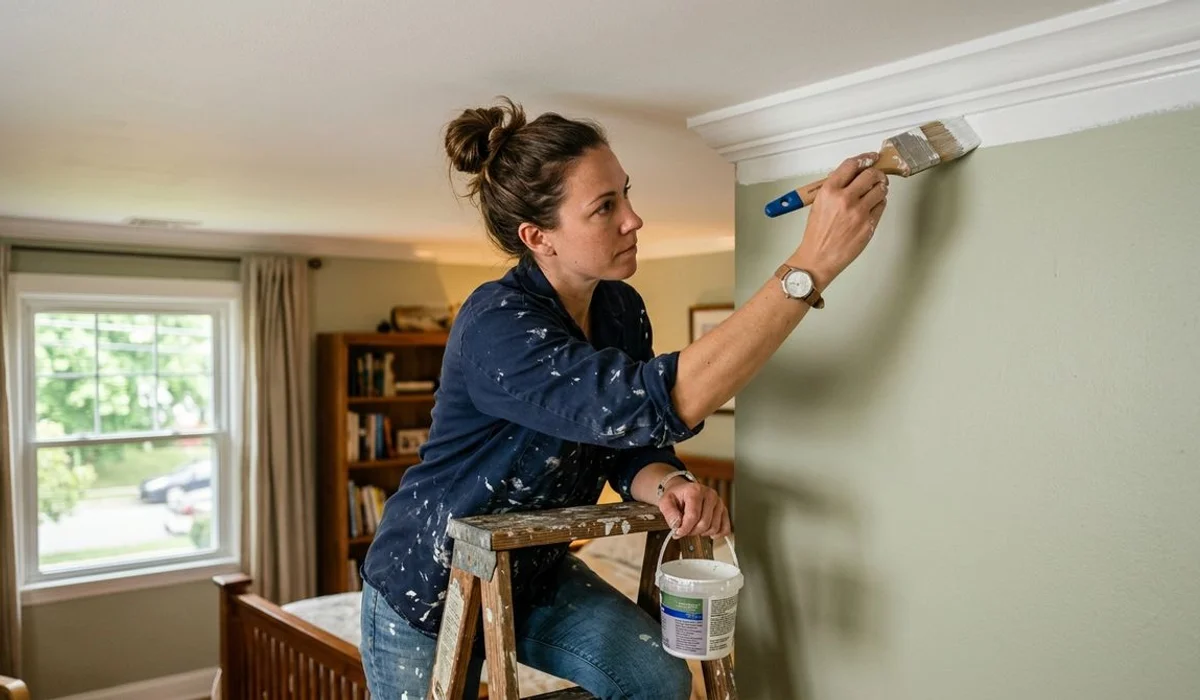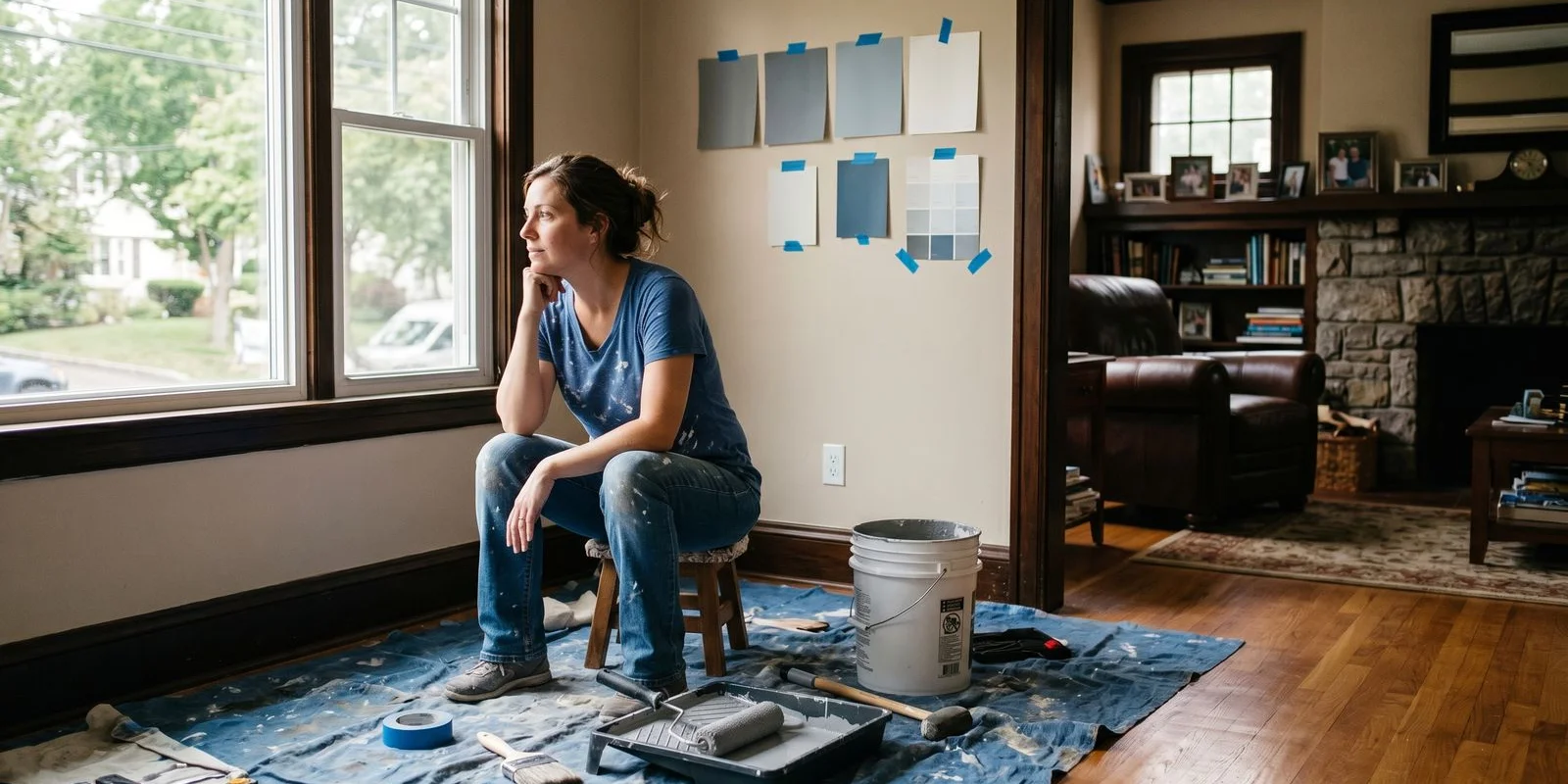
Real cost comparison, time commitment, and quality trade-offs between DIY and hiring a pro for interior painting.
We hear the exact same debate from homeowners every spring. You want to refresh your space, and you are staring at a massive gap between the price of fifty gallons of paint and a full-service contractor quote.
Deciding between a diy vs professional painting project requires looking past just the materials and realistically valuing your own weekend time.
The reality of northern New Jersey real estate is that a rushed paint job can actually subtract value from your home. Peeling baseboards and ceiling roller marks stand out instantly to potential buyers. Let’s look at the actual 2026 data, what it really takes to achieve a flawless finish, and then explore a few practical ways to protect your investment.
Where DIY Wins
Doing it yourself is the clear winner for single, small rooms that need minimal prep work. A smooth drywall surface without water damage or old wallpaper is highly forgiving for a beginner. We usually recommend the DIY route for low-stakes spaces like a guest powder room or a basement in a rental property.
You can save a significant amount of money if you stick to straightforward projects. A standard 10-by-10 foot bedroom takes about two gallons of paint.
We suggest investing in premium products like Benjamin Moore Regal Select, which currently averages $60 to $85 per gallon in 2026. This higher-end paint offers excellent coverage, meaning you will not waste your Saturday applying a necessary third coat.
Here are the specific scenarios where picking up a roller yourself makes the most sense:
- Single small rooms (powder rooms, small bedrooms)
- Surfaces with minimal prep requirements (smooth drywall, no damage, no wallpaper)
- Projects where you already own or will reuse tools like extension poles and pans
- Low-stakes rental or investment properties that are not being sold right away
- Weekends where you actually enjoy physical labor and have free time to spare
Where Professional Wins
Hiring a professional interior painter is the superior choice for whole-home refreshes, high ceilings, and properties requiring specialized lead containment. A massive color change across a two-story foyer demands specialized equipment and efficient crews. We step in when the scope of work exceeds a few easy weekend hours.
You also have to consider the regulatory side of home maintenance in older neighborhoods. The New Jersey Lead-Safe Certification Law now requires specific dust wipe sampling and visual inspections for pre-1978 properties at tenant turnover.
We manage these strict lead-safe containment protocols daily. Trying to scrape or sand plaster walls in an older historic home without proper HEPA filtration is a massive health and liability risk.
Advanced Finishes and Architecture
Certain architectural features simply require commercial-grade equipment. Our team utilizes High Volume Low Pressure (HVLP) spray booths to give kitchen cabinets a flawless, factory-grade finish. You will struggle to achieve that level of smoothness with a standard foam roller or a cheap big-box sprayer.
Professionals bring the most value to these specific situations:
- Whole-home refreshes where speed and timeline are critical
- Pre-sale or pre-listing refreshes targeted at maximizing buyer appeal
- Pre-1978 homes requiring legal lead-safe containment and plaster repair
- Rooms with ceilings over 10 feet that require scaffolding setups
- Cabinet refinishing requiring a spray booth and HVLP tools for a factory finish
- Dramatic whole-home color changes needing tinted primer and multiple topcoats
Real Cost Comparison (2,000 sq ft home)
A complete professional interior paint job for a 2,000-square-foot New Jersey home costs between $4,000 and $10,000, while a DIY approach requires around $800 to $1,000 in materials. The final invoice for professional services fluctuates based on the amount of drywall repair, the trim complexity, and the number of colors you select. We prefer to look at the total cost of ownership over a ten-year period.
A fast, low-quality DIY project usually needs a complete repaint in three years due to fading or peeling. Our 2026 pricing data shows that professional painters charge roughly $3 to $7 per square foot, but their thorough surface preparation ensures the finish lasts up to a decade.
You must factor your personal time and the risk of rework into this diy painting cost comparison.
Breaking Down the Numbers
Many homeowners underestimate the sheer volume of supplies required to prep and paint a full house. We put together a side-by-side breakdown so you can see exactly where the money goes.
| Expense Category | Professional Route | DIY Route |
|---|---|---|
| Labor & Overhead | $4,000 to $10,000 ($3-$7/sq ft) | 60 to 100 hours of personal time over 3-4 weekends |
| Premium Paint (6-8 gallons) | Included in quote | $400 ($60-$85 per gallon) |
| Quality Primer (2 gallons) | Included in quote | $80 |
| Application Tools (Brushes, rollers, frames, trays, poles) | Included in quote | $150 to $250 |
| Prep Materials (Tape, drop cloths, patching compound, caulk) | Included in quote | $180 |
| Total Estimated Cost | $4,000 to $10,000 | $810 to $910 + 100 Hours |
What a DIY project actually costs you beyond the cash at the register is the physical toll and the quality trade-off. We often get calls to fix texture inconsistencies, wobbly ceiling cut lines, and peeling paint caused by skipping the sanding phase. You carry the full rework risk if you select the wrong sheen or fail to prime a patched hole.
The Honest Middle Path
If you are still on the fence about whether you should hire a painter vs diy, you can easily combine both methods to save money and ensure high-quality results. You can paint the simple bedrooms and walk-in closets yourself while leaving the high-risk areas to a licensed contractor. We often structure hybrid scopes of work for budget-conscious homeowners in Northern New Jersey.
This shared approach protects the most visible and difficult parts of your property. Our teams can handle the tricky two-story foyers, the detailed crown molding, and any pre-1978 rooms that require specialized lead abatement protocols. You get to maintain tight control over your budget by taking on the straightforward walls over a few weekends.
”A hybrid approach lets you save money on the simple tasks while investing in professional durability for high-traffic and complex areas.”
We have quoted plenty of hybrid projects where the homeowner handled a portion of the prep or painting themselves. Review our interior painting service page or check out our interior painting cost guide to compare options apples-to-apples.
If you are asking yourself, ‘should i paint myself or hire a crew?’, finding the right balance keeps your weekends free and guarantees your home looks its absolute best. Reach out to schedule a free on-site estimate today to see exactly how a hybrid approach could work for your specific floor plan.