Realistic lifespan expectations for painted kitchen cabinets, failure modes, and how to extend cabinet paint life.
We constantly hear from homeowners asking how long painted cabinets last and if updating their outdated kitchen is a smart investment. It makes sense, given that a full cabinet replacement in Northern New Jersey can easily run $15,000 to $35,000.
The secret to maximizing your budget lies in understanding exactly what to expect from modern cabinet coatings. Our team has observed exactly how a high-quality paint job can save you up to 70 percent of that replacement cost.
A fresh look only matters if it can withstand the daily chaos of a busy household.
Let’s look at the actual data, what it tells us about durability, and then explore a few practical ways to protect your investment.
Realistic Lifespan by Product
We know that a direct factor in how long painted cabinets last under normal daily use is the specific product you choose. A professional-grade application typically holds up for 8 to 12 years.
Waterborne alkyd enamels represent the absolute top tier for this kind of work in 2026. Our experience shows that these premium options cure to a much harder finish than standard wall paint.
This durability is why they remain the standard for high-traffic kitchens. You can compare these products directly to help you make a clear choice.
- Premium waterborne alkyd (Benjamin Moore Advance): 8 to 12 years with professional application.
- Urethane trim enamel (Sherwin-Williams Emerald Urethane): 7 to 10 years, offering excellent resistance to seasonal humidity swings.
- Mid-tier conventional latex enamel: 5 to 8 years, though it lacks the self-leveling smoothness of alkyds.
- Traditional oil-based enamel: 10+ years of durability, but it will noticeably yellow over time.
- Budget DIY acrylic latex: 1 to 3 years before you start seeing significant chip-out around the handles.
| Paint Type | Expected Lifespan | Best Use Case |
|---|---|---|
| Waterborne Alkyd | 8 to 12 years | High-traffic kitchens requiring a factory-smooth finish |
| Urethane Enamel | 7 to 10 years | Kitchens prone to high humidity and temperature shifts |
| Conventional Latex | 5 to 8 years | Low-traffic areas like guest bathroom vanities |
| Budget Acrylic | 1 to 3 years | Temporary flips or quick cosmetic fixes |
Common Failure Modes
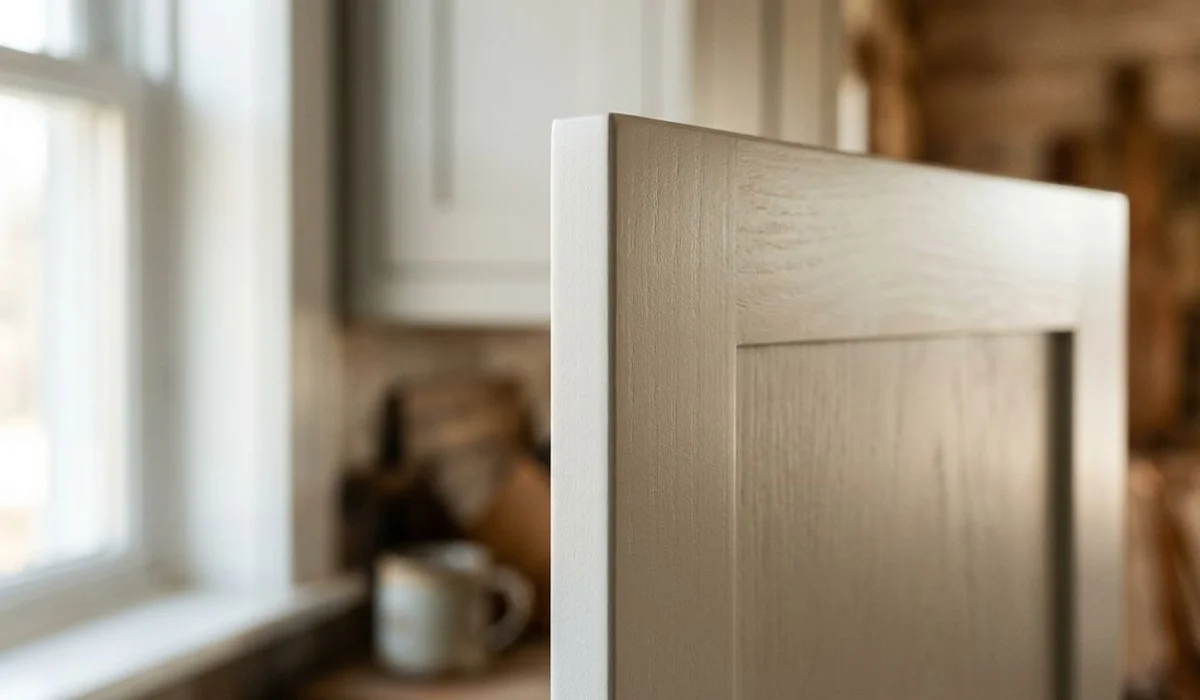
Our crews frequently repair premature chipping around corners when previous DIY projects skip crucial preparation steps. The most frequent cause of cabinet paint failure is this exact lack of adhesion on the door edges.
Moisture intrusion is the second biggest culprit, especially in heavy-use zones. We notice peeling most often around farmhouse sinks or dishwashers where steam regularly escapes.
Preventing these issues requires understanding exactly how the paint breaks down. Here are the typical points of failure to watch out for.
- Chip-out at corners and edges: This remains the most common issue. Rushing the reinstallation process or failing to properly degrease prevents the paint from bonding.
- Print-through from hardware: Heavy handles can leave imprints into the paint surface. This happens when homeowners use non-alkyd latex that stays soft, or when they install hardware before the full 30-day cure time.
- Yellowing on whites: Oil-based paints predictably yellow within 3 to 5 years, particularly near gas stoves or in low-light kitchens. Modern waterborne alkyds completely eliminate this problem.
- Peeling at the sink area: Constant water intrusion destroys the coating. Undermount sink caulk failure allows moisture to seep directly into the cabinet box.
- Grain print-through on oak: Oak cabinets have deep, open grain patterns. Skipping a high-build grain filler means the texture will show through clearly under strong side lighting.
How to Extend Cabinet Paint Life
We tell every client that the real work happens before the first drop of paint is even applied. Proper surface preparation and respecting the paint’s full curing schedule are the two most important steps to extend cabinet paint lifespan.
A rushed job might look fine on day one, but it will start degrading within months. Our step-by-step process ensures the finish hardens into a durable, protective shell.
Following these proven guidelines prevents the most common forms of cabinet paint wear. You can significantly improve the longevity of your kitchen with these exact methods.
- Execute thorough initial prep: Degreasing with trisodium phosphate (TSP), sanding with 320-grit paper, and using a high-quality bonding primer are non-negotiable for lasting adhesion.
- Invest in a premium paint line: Choose advanced formulations like Benjamin Moore Advance or Sherwin-Williams Emerald Urethane instead of basic builder-grade wall paints.
- Allow a full cure before reinstalling: Give the doors a minimum of 2 to 3 days before hanging them back on the hinges.
- Be gentle for the first 30 days: While the paint feels dry to the touch in hours, alkyd-urethane blends take a full 30 days to completely crosslink and harden. Avoid over-tightening hardware or aggressively wiping the doors during this window.
- Schedule annual cleanings: Wipe down the surfaces with mild soap and water. Harsh chemical degreasers or abrasive sponges will strip the finish right off.
- Perform quick touch-ups on chips: Address minor damage immediately before moisture gets under the paint film.
“Applying two thin coats of cabinet paint cures faster and levels better than one thick coat. A heavy layer can stay wet underneath for over 30 hours, ruining the structural integrity of the finish.”
When to Refinish vs Replace
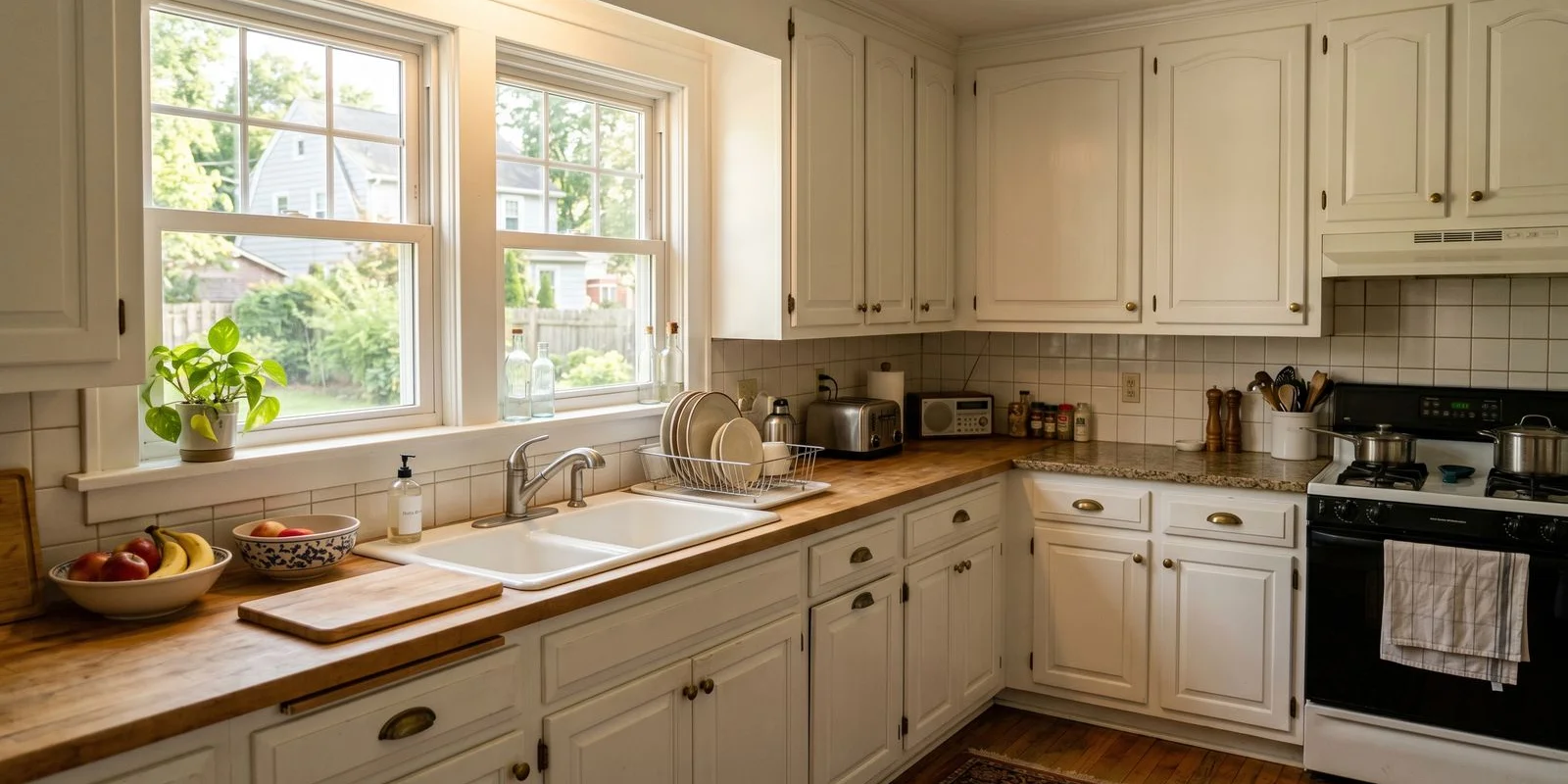
We always evaluate the physical condition of the wood before recommending a painting project. Refinishing makes the most financial sense when your cabinet boxes remain structurally sound and you simply want to update the color.
According to 2026 pricing data, professional cabinet painting in New Jersey costs between $3,000 and $6,000. Our clients appreciate that this is significantly less than a full replacement, which typically ranges from $15,000 to $35,000.
Painting cannot fix broken joints or severe water damage. Here is a straightforward guide to help you decide your next steps.
- Chip-out on 10+ doors: A professional repaint makes perfect sense here. The existing color might be failing, but the foundation is still perfectly good.
- Loose drawer boxes or failing hinges: You should replace the affected components entirely. Painting over failing hardware or broken tracks is just throwing money away.
- MDF swelling from moisture: Replace the damaged section. Once water swells medium-density fiberboard, paint cannot hide the structural warping.
- Buckled or delaminating boxes: This requires a total cabinet replacement. If the core boxes are falling apart, superficial coatings offer zero benefit.
| Kitchen Upgrade Strategy | Average 2026 Cost (NJ) | Best Application |
|---|---|---|
| Professional Repainting | $3,000 to $6,000 | Updating colors on solid, undamaged cabinet boxes |
| Cabinet Refacing | $5,000 to $12,000 | Changing door styles while keeping the original layout |
| Full Replacement | $15,000 to $35,000 | Completely redesigning the kitchen footprint |
Color Drift Over Time
We typically see white cabinets take on a very subtle yellow hue from constant UV exposure, even when using premium paints. Almost all painted surfaces will experience a slight color shift over a decade of exposure to sunlight and cooking heat.
Darker shades tend to fade and lose a bit of their original vibrancy over time. Our team finds that attempting a spot color-matched touch-up after 5 to 7 years often leaves a visible mismatch.
A full repaint offers the cleanest solution when this natural painted cabinets durability loss becomes widespread. Understanding how long painted cabinets last helps you make the right call for your home.
We are ready to assist with your next project. See our interior painting service for expert help. If you are still weighing your options, explore our guide on cabinet painting vs refacing vs replacement to find the best path forward.