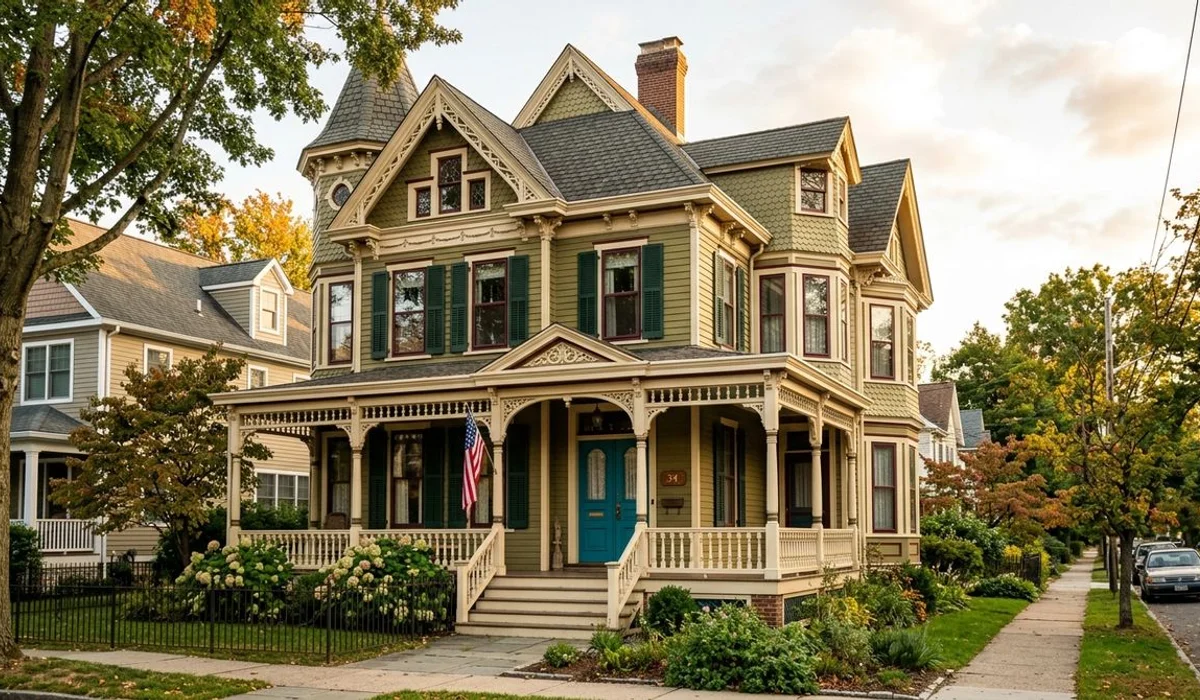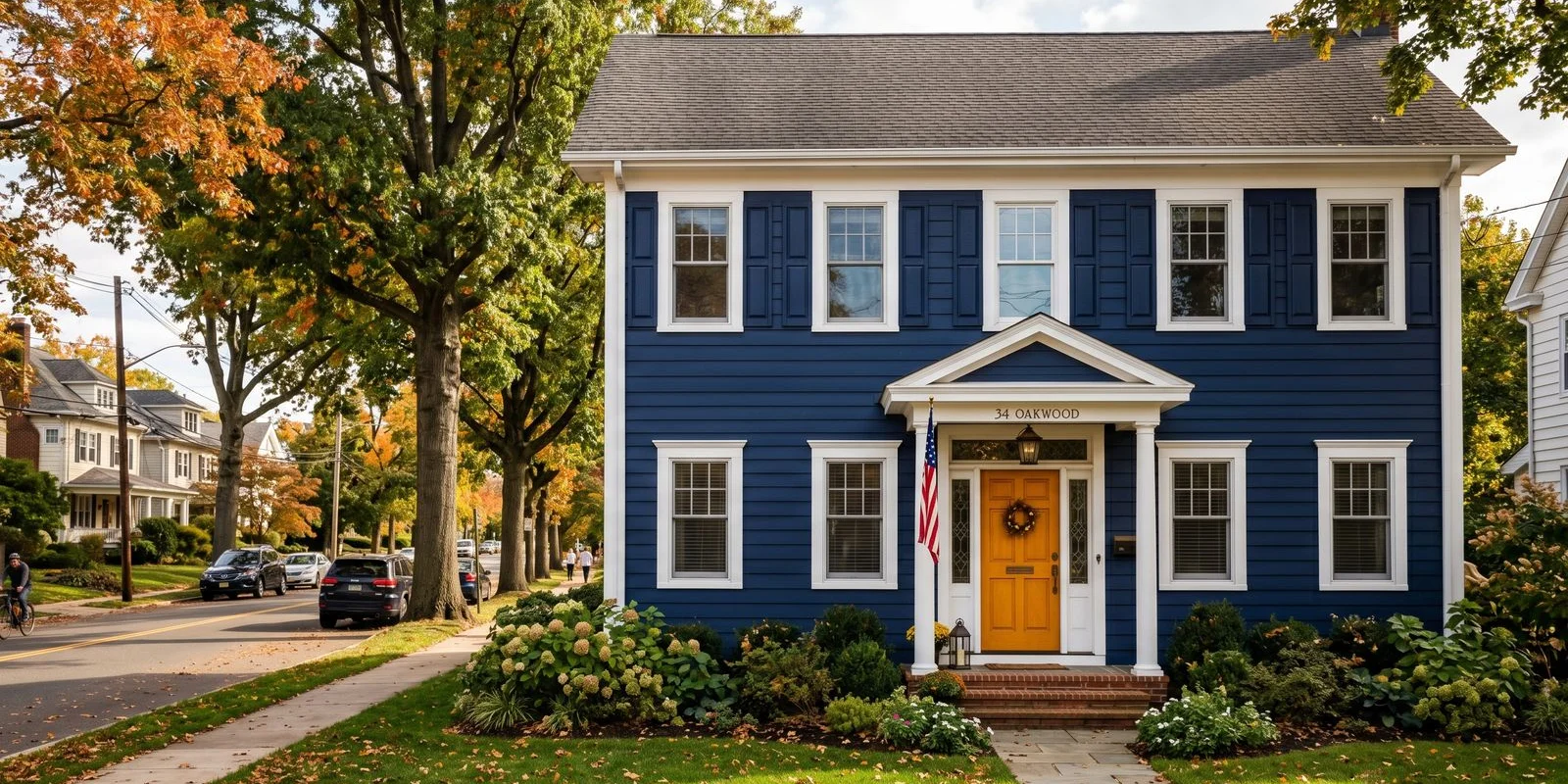
Era-appropriate and modern-interpretation color palettes for Northern NJ's signature housing stock.
Finding the best paint colors colonial victorian nj homeowners trust is a delicate balancing act. Many properties in Essex and Bergen counties fall under the watch of local Historic Preservation Commissions. You have to honor the original architecture while making the space feel current.
Our team always points to the financial data before starting a project.
A fresh exterior paint job can deliver a return on investment of up to 152% in 2025. The right historic colonial paint colors literally pay for themselves by increasing buyer confidence and curb appeal.
We are going to break down the most effective exterior and interior color combinations for Colonials and Victorians in our area. You will see exactly which hues perform best and why they matter. Feel free to reference our interior painting service or our exterior painting service if you need hands-on help along the way.
Classic Colonial Palettes
Colonials are the backbone of Northern New Jersey real estate. Choosing the right exterior palette highlights their symmetrical beauty and boosts street appeal. Our exterior projects often start with these proven combinations. Let us look at the top choices for this iconic style.
Timeless Whites and Dark Accents
Benjamin Moore Simply White (OC-117) and Sherwin-Williams Alabaster (SW 7008) are two of the most popular body colors. Simply White boasts a high Light Reflectance Value of 91.7, making it remarkably bright with just a touch of yellow. Alabaster sits at a slightly lower 82 LRV, offering a creamier, softer finish.
We frequently use Alabaster when a home receives intense, direct afternoon sunlight. The softer tone prevents a blinding glare.
- Body: Benjamin Moore Simply White (OC-117) or SW Alabaster (SW 7008)
- Trim: White Dove (OC-17)
- Shutters/Door: Black or hunter green (BM Essex Green HC-188)
- Works on: Classic colonial, Cape Cod, farmhouse
Warm Colonial Neutrals
Cool grays are entirely out of favor for historic exteriors. Warm off-whites and soft beiges have reclaimed the top spot for traditional homes. Our application crews love how these earthy tones blend with mature landscaping. A warm base color makes a striking dark shutter stand out beautifully.
- Body: BM Shaker Beige (HC-45) or SW Natural Linen (SW 9109)
- Trim: White Dove or BM Ballet White (OC-9)
- Shutters: BM Iron Mountain (2134-30, dark warm gray)
- Door: Barn red (BM Caliente AF-290) or soft black
The Popular Navy and White
Navy exteriors have dominated Northern NJ neighborhoods for the past few years. Dark blue provides a crisp, nautical contrast against bright white trim. We always recommend checking with your local Historic Preservation Commission before applying dark colors in a designated district. Some towns require a Certificate of Appropriateness for drastic color changes.
- Body: BM Hale Navy (HC-154) or BM Old Navy (AF-675)
- Trim: White Dove
- Shutters: Match body
- Door: Natural wood or warm white
Colonial Revival / Craftsman Palettes
Craftsman and Revival homes feature gorgeous natural materials like stone, brick, and heavy timber. The best paint colors complement these elements instead of competing with them. Our design approach focuses on drawing out the undertones in the masonry. This creates a cohesive, grounded appearance.
Soft Sage with Brick
Green is a natural partner for red or orange brickwork. BM Livingston Gold (HC-16) and SW Svelte Sage (SW 6164) provide a muted, historical feel. We strongly advise homeowners to test lead paint on pre-1978 homes before scraping any old siding. The EPA Renovation, Repair and Painting rules require specific safety steps for older properties.
- Body: BM Livingston Gold (HC-16) or SW Svelte Sage (SW 6164)
- Trim: Warm off-white
- Door: Black or deep forest green
Warm Gray on Stone Bases
Stone foundations need a specific gray to look their best. BM Gray Owl (OC-52) offers a perfect balance of warm and cool undertones. Our painters often pair this body color with Swiss Coffee trim for a gentle contrast. Barn red or navy doors add a classic pop of personality.
- Body: BM Gray Owl (OC-52)
- Trim: White Dove or Swiss Coffee
- Door: Barn red, navy, or deep green
Victorian Palettes
Victorian exterior colors require a completely different strategy than Colonials. Their intricate gingerbread trim, fish-scale shingles, and multiple rooflines demand complex color mapping. Our team studies the architectural details to highlight the home’s unique craftsmanship. Getting this wrong can make a historic gem look chaotic.
Traditional vs. Simplified Victorian Options
Deciding how many colors to use is your first major hurdle. A traditional Victorian scheme uses at least three distinct shades, while modern interpretations often simplify the look. We created this comparison to help you weigh the options. The table below breaks down the maintenance and best use cases for each style.
| Palette Style | Number of Colors | Maintenance Level | Best For |
|---|---|---|---|
| Simplified 2-Color | Two (Harmonizing body and trim) | Easy to maintain and touch up | Modern updates, budget-friendly projects |
| Traditional 3-Color | Three (Body, trim, dark accent sash) | Moderate maintenance | Standard historic homes, balancing cost and charm |
| Full 5-Color | Five (Siding, fascia, sash, shutter, door) | High maintenance, costly prep | Museum-quality restorations, intricate architecture |
The 3-Color Traditional Approach
This is the sweet spot for most Montclair and Glen Ridge Victorians. You get the historical accuracy without the overwhelming maintenance of a five-color scheme. Our experts usually select a muted body color, a creamy trim, and a very dark accent for the window sashes. The dark sash pushes the window back visually, creating depth.
- Body: Muted sage, deep red, dark mustard, or forest green
- Trim: Cream or warm white
- Sash/detail color: Dark contrasting color (deep red with sage, cream with deep red)
The Full 5-Color Victorian
This approach applies a different but harmonizing shade to the siding, main trim, sashes, shutters, and doors. It requires an extensive budget for labor and premium products like Farrow & Ball. We reserve this method for homes with highly pronounced architectural details. Every single hue must be carefully plotted on a mockup first.
- Body: Siding color
- Main trim: Fascia, corners
- Sash: Window trim
- Shutters: Complementary accent
- Door: Distinct welcoming color
Interior Palettes for Historic Northern NJ Homes
Updating the inside of a historic home requires honoring the original materials. Plaster walls and century-old woodwork react differently to paint than modern drywall. Our interior specialists focus on enhancing these textures rather than hiding them. An interior paint refresh can yield a return on investment of up to 107%.
Best Practices for Older Interiors
Choosing interior paint goes beyond just picking a pretty color. You must consider the condition of the surfaces and the available natural light. We rely on these core principles for historic properties. These rules protect the value of your vintage home.
- Plaster-wall rooms: Warm off-whites show plaster texture beautifully. The slight imperfections add character instead of looking like flaws.
- Original wood trim: Do not paint it. Stain or clear polyurethane lets the wood grain breathe. If you need replacement pieces, local suppliers like Kuiken Brothers in Midland Park offer historically accurate moulding profiles.
- Period-appropriate deeps: Colonial red, deep forest green, and navy are all excellent choices. Use these rich tones on a single accent wall to anchor a room.
- Kitchens in older homes: Bright warm whites open up typically small spaces. Cabinets painted in navy or soft green read as classic and timeless.
Our Signature Northern NJ Palettes: Best Paint Colors Colonial Victorian NJ
Benjamin Moore actually established the Commonwealth Club in Upper Montclair back in 1904. His brand’s benjamin moore colonial colors are deeply rooted in our local architecture. We have developed a set of foolproof palettes specifically for this region. These combinations pull inspiration from the unique character of local neighborhoods.
Our clients consistently receive compliments and high appraisal values using these exact schemes. Try these combinations for guaranteed curb appeal.
Town-Specific Color Profiles
Every township has its own architectural flavor and unwritten design rules. A color that looks brilliant on a Montclair street might feel out of place in Clifton. We matched our favorite regional styles with their perfect paint partners. This list represents our most requested local designs.
- Nutley colonial: Warm white body, black shutters, and a natural wood door. This provides an elegant, crisp finish.
- Montclair Victorian: A 3-color era-appropriate scheme. Muted body, cream trim, and a dark accent on the sash and shutters.
- Bloomfield Craftsman: Soft sage body, deep olive trim, and cream detail. This earthy combination highlights natural masonry bases.
- Clifton split-level: Modern navy body, white trim, and a bold amber door. It is a timeless update that feels fresh and current.
Picking the best paint colors colonial victorian nj properties require is a big step. You must respect the historic architecture while ensuring the home feels welcoming today.
Our team is ready to guide you through the selection and application process.
Contact us today to schedule your personalized color mapping session.