A practical framework for choosing interior paint colors — undertones, light, and the fixed elements you're painting around.
Learning how to choose paint colors interior designers approve of often feels like a guessing game for Northern New Jersey homeowners.
Our team has seen perfectly good spaces lose their appeal simply because the wall color clashed with the lighting. Perfectly picking interior paint color the first time saves you from expensive repaints.
We are going to break down the exact strategies professional painters use to select foolproof colors. You will find practical tips on evaluating undertones, working with local light, and testing samples effectively.
Start with Fixed Elements
When deciding how to choose paint colors interior spaces naturally complement, the features you cannot easily change must drive your entire palette.
Our strategy involves matching undertones to the permanent fixtures already installed in your house. Fixed elements in your home include several key surfaces:
- Wood floor color (warm vs. cool undertones)
- Cabinet finishes (especially white oak or painted kitchen styles)
- Counter materials (like granite, butcher block, or trending Calacatta Idillio quartz)
- Tile and stone (backsplashes, fireplace surrounds, and bathroom floors)
- Built-in wood trim (oak, cherry, and pine all have different warmth levels)
Fighting a warm oak floor with a cool gray wall creates immediate visual tension. We highly recommend taking a photo of your fixed elements before visiting the paint store.
This simple step keeps your project grounded in reality.
Understand Undertones
The Hidden Colors in Neutrals
Neutrals always have secondary colors hiding inside them.
Our local color consultants see homeowners struggle with this concept daily. You might buy a gray paint, only to find it looks purple on your wall.
We classify common neutrals based on their hidden biases:
- Warm beige (greige): Yellow, orange, or pink undertone
- Cool gray: Blue, green, or purple undertone
- True white: Rare; most whites have a warm or cool bias
- “Off-white”: Usually has a yellow, pink, or blue undertone
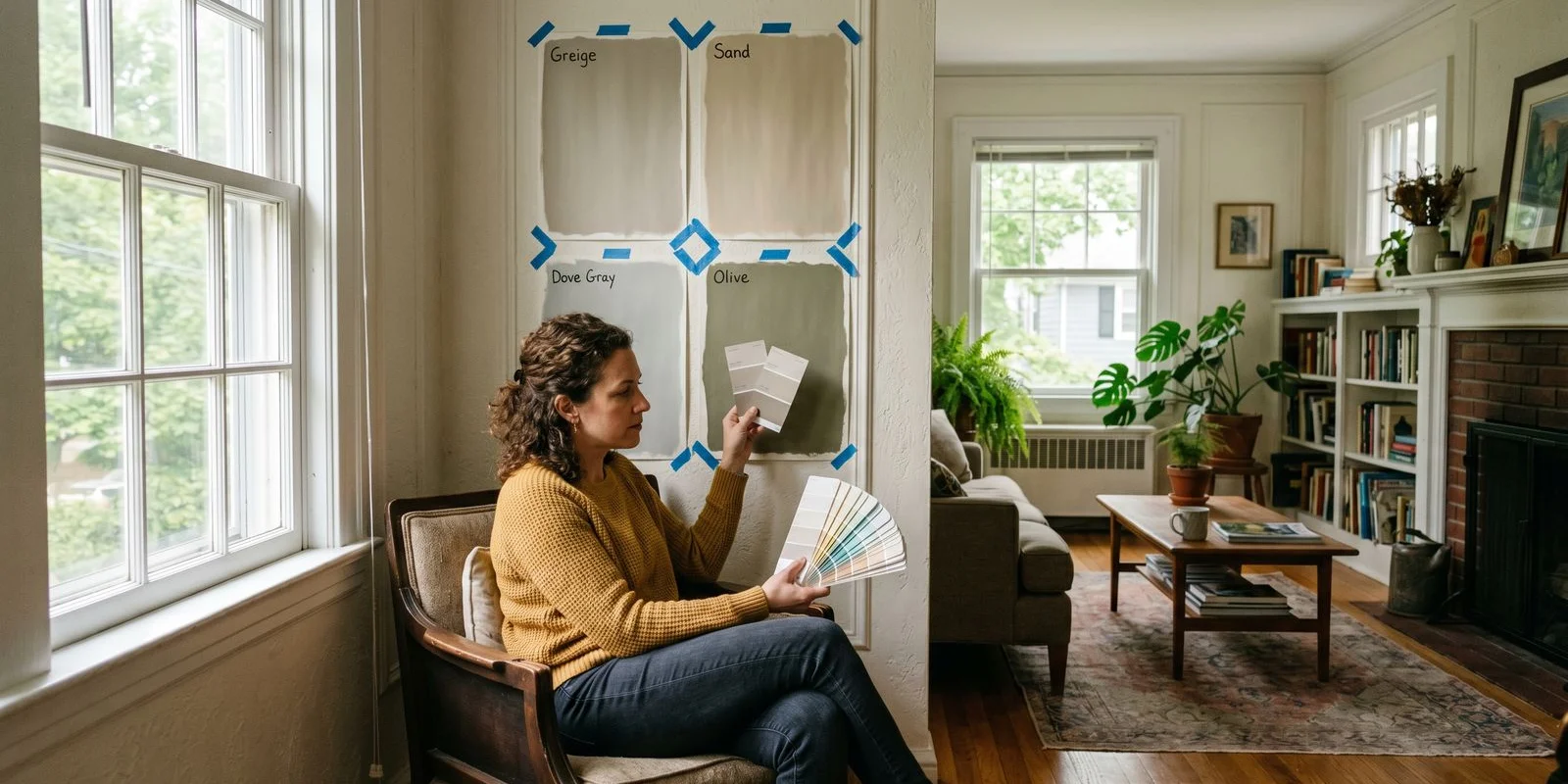
Reading these paint color undertones requires comparing similar colors side by side. Our favorite trick is holding a paint swatch directly against a sheet of pure white printer paper.
This stark contrast instantly reveals the hidden blue, green, or pink tones.
Mastering Light Reflectance Value (LRV)
Light Reflectance Value, or LRV, measures the percentage of light a paint color reflects on a scale of 0 to 100.
We use this specific metric to predict exactly how bright a room will feel. A score of 0 absorbs all light, while a score near 100 reflects it entirely.
Our painters find that an LRV between 60 and 70 hits the sweet spot for living areas. Colors with an LRV under 50 will absorb light, making a room feel cozier but requiring more artificial lighting.
Light in Northern NJ Homes
Northern New Jersey experiences distinct seasonal light shifts, from harsh winter glare to hazy summer sun.
We always evaluate a room’s geographic exposure before recommending a final shade. Sunlight changes the appearance of paint dramatically throughout the day.
Our standard guidelines for regional lighting include:
- North-facing rooms: Expect cool, flat light, so warm colors help balance the room.
- South-facing rooms: Enjoy warm, bright light, meaning most colors look excellent here.
- East-facing rooms: Experience a warm morning and a cool afternoon.
- West-facing rooms: Start with a cool morning and end with a warm afternoon.
Low-light interior rooms require much lighter shades. We warn clients that color saturation reads much darker without natural sunlight. A mid-tone gray will look like charcoal in a windowless hallway.
The 60-30-10 Rule
Interior designers use a classic ratio to create perfectly balanced spaces.
Our team applies this specific formula to coordinate paint with furniture and finishes. This design principle prevents any single color from overwhelming the room.
We break down the room into three distinct percentages:
| Percentage | Role in the Room | Common Applications | Recommended Finish |
|---|---|---|---|
| 60% | Dominant Color | Primary walls, large area rugs | Matte or Eggshell |
| 30% | Secondary Color | Trim, accent walls, large furniture | Satin or Semi-gloss |
| 10% | Accent Color | Throw pillows, artwork, accessories | High-gloss or Metallic |
Paint naturally belongs in the 60 percent category for your main walls. We also use paint to satisfy the 30 percent portion by adding contrasting trim or an accent wall. This structured approach guarantees a cohesive look.
Our Go-To Neutrals for Northern NJ Homes
Earthy tones and warm greens are replacing sterile grays to become the best interior paint color nj homes can feature in 2026.
Our crews consistently rely on a few proven shades from premium lines like Benjamin Moore Regal Select and Sherwin-Williams Emerald. These high-quality paints offer superior coverage and rich pigments.
We recommend the following reliable options for local homes:
- Warm greige walls: Benjamin Moore Revere Pewter (HC-172), Sherwin-Williams Accessible Beige (SW 7036)
- Soft warm white walls: BM Swiss Coffee (OC-45), BM White Dove (OC-17)
- Cool gray walls: BM Balboa Mist (OC-27), SW Agreeable Gray (SW 7029)
- Trim whites: BM Simply White (OC-117), SW Alabaster (SW 7008)
- Earthy accents: Sherwin-Williams Evergreen Fog adds a popular, nature-inspired touch.
Every home is unique, but these specific colors rarely disappoint.
Sample Before You Commit
Professional interior painting in New Jersey costs between $2 and $7 per square foot, making mistakes very expensive. We require clients to test colors in their actual space before we open a single can of paint. You must evaluate how the hue behaves under your specific lighting conditions.
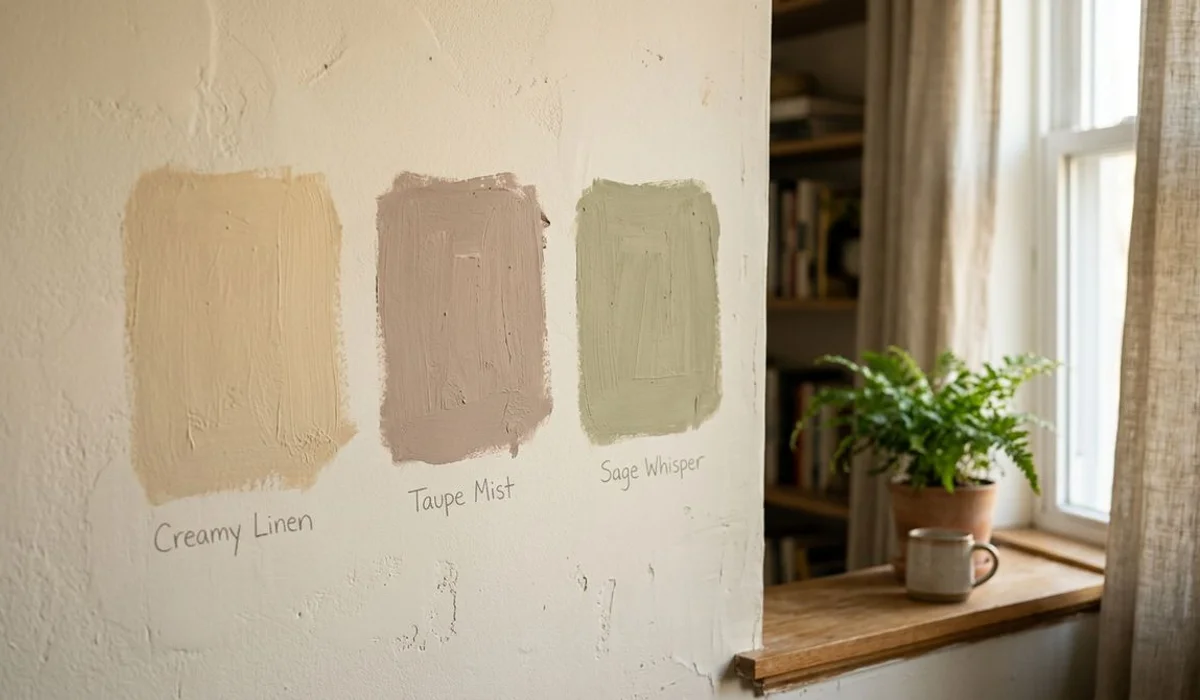
Our standard protocol involves buying quart samples and painting 12x12 patches on two different walls. Place one patch on an interior wall and another on a wall that receives natural light.
We suggest leaving these patches up for at least 48 hours to observe them closely during the morning, midday, and evening. Modern peel-and-stick samples from companies like Samplize offer a fantastic, mess-free alternative. This single habit prevents the vast majority of color regrets.
See our interior painting service and our color consultation options to plan your next project.
Conclusion
Understanding how to choose paint colors interior lighting flatters takes patience and a strategic eye.
Our team knows that testing samples and understanding your home’s unique light will yield the best results. The right shade transforms an outdated room into a modern, inviting space.
We encourage you to start assessing your fixed elements today. Grab a few samples, follow the 60-30-10 rule, and start planning your upgrade.
If you need expert execution, schedule a consultation with our local painters to bring your vision to life.