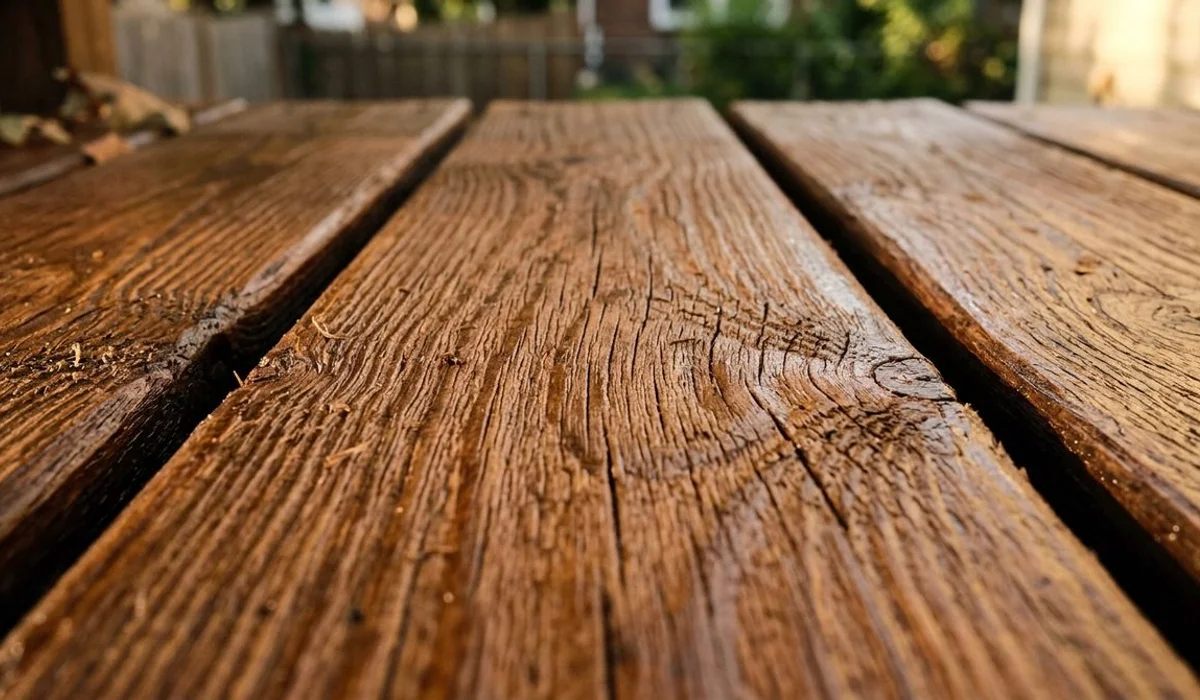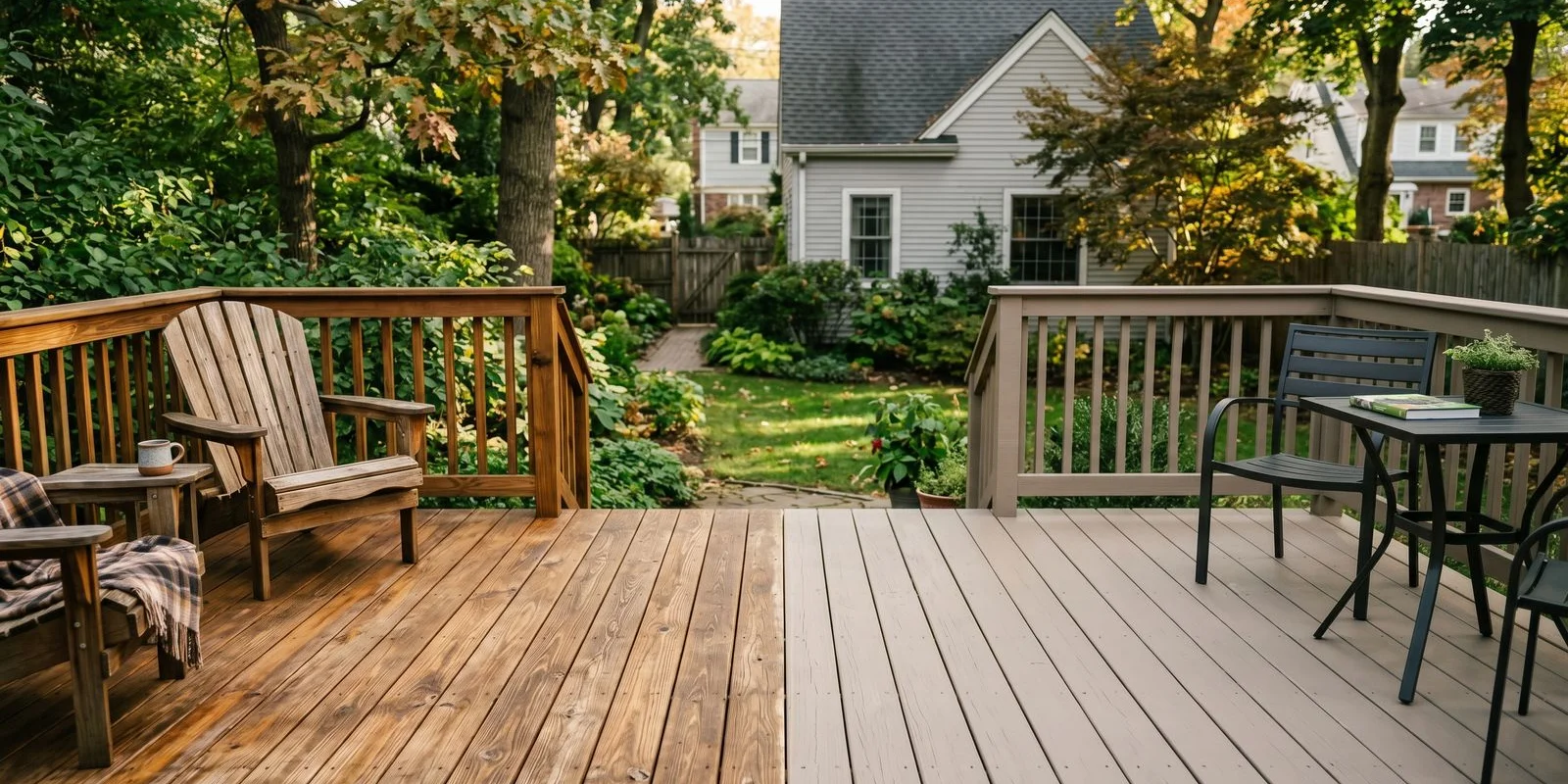
Performance comparison of deck paint vs deck stain on pressure-treated, cedar, and composite surfaces.
Our team consistently hears the same question from Northern New Jersey homeowners after a harsh winter.
People want to know the bottom line on deck stain vs paint and which option actually survives the local climate.
You see the peeling boards in your neighborhood every spring. The choice you make now determines whether you will enjoy a simple weekend refresh next year or face a massive scraping project.
Let’s look at the hard data on how these finishes perform. We will break down why certain products fail faster, review the true costs of maintenance, and share the specific coatings trusted by local professionals.
The Honest Comparison
Deciding whether to paint or stain deck surfaces comes down to a trade-off between upfront appearance and long-term maintenance. Semi-transparent stains fade gracefully over a few years, while solid paint creates a thick barrier that inevitably peels.
According to 2026 industry data from Angi, a standard deck refinishing job averages around $1,000, and stripping old, failed paint adds significantly to that labor cost. Penetrating oil stains from brands like Cabot or Defy Extreme absorb directly into the wood fibers.
This absorption means the finish cannot bubble or flake off. Solid stains and deck paints sit on top of the wood, leaving them vulnerable to scraping from patio furniture and foot traffic.
Our crews prefer penetrating products because they make future maintenance drastically cheaper and easier.
| Semi-Transparent Stain | Solid Stain | Deck Paint | |
|---|---|---|---|
| Appearance | Wood grain visible | Opaque, some grain | Opaque, no grain |
| Lifespan (NJ) | 2-3 years | 3-5 years | 3-6 years (but peels when it fails) |
| Failure mode | Gradual fade, no peeling | Minor peeling in wear zones | Peeling, flaking |
| Refresh difficulty | Easiest (clean + reapply) | Moderate (may need sand) | Hardest (full strip if peeling) |
| Best for | Cedar, new PT | Older PT, aged wood | Deck that was already painted |
Why Paint on Decks Fails Faster Than Paint on Siding
Paint fails on decks faster than siding because horizontal boards trap standing water, while vertical siding sheds rain instantly. The intense moisture cycling in Northern New Jersey forces the wood to swell and shrink, which tears the rigid paint film apart.
Our exterior specialists see this damage constantly on local homes. Decks take a daily beating from ultraviolet rays, heavy foot traffic, dragging chairs, and heavy winter snow loads.
Paint on these horizontal surfaces typically suffers from a few specific failure points.
- Peeling heavily along main walking paths.
- Bubbling upward where trapped moisture tries to escape.
- Showing glaring white spots every time a chip breaks off.
A 2025 industry analysis confirmed that moisture trapped beneath a non-breathable film is a leading cause of early deck rot. High-quality oil stains avoid this issue completely.
Stain simply absorbs into the cellular structure of the timber rather than forming a crust. You avoid the nightmare of peeling entirely because there is no surface film to crack.
When Paint Still Makes Sense
Applying paint or a heavy solid stain makes sense only when the wood is already heavily damaged, previously painted, or built from non-wood materials. A solid stain vs paint deck comparison shows that both options hide ugly imperfections, but solid stains often grip weathered wood slightly better.
We sometimes encounter outdoor spaces where a transparent finish would look terrible.
- The deck is already painted, and a full strip-and-sand project is not in the budget.
- You require a highly specific, custom color to match your home’s exterior trim.
- The surface is an older composite material that cannot absorb a penetrating stain.
- The structure is a low-use, covered porch that sees minimal rain and sunlight.
Products like Behr Premium Solid Color Waterproofing Stain provide a thick, acrylic shell that fills deep cracks in aging boards.
This thick coating extends the usable life of splintering pressure-treated lumber for a few more seasons. Just understand that choosing a solid coating commits you to a cycle of scraping and repainting in the future.
Our Default Recommendations
The best deck finish options depend entirely on the species of your wood and its current condition. We match the chemical makeup of the coating to the specific needs of the material.
- Pressure-treated deck: Semi-transparent oil stain, like those from Cabot, Sikkens, or PPG, for deep penetration.
- Cedar deck: Semi-transparent oil or high-quality water-based products like Ready Seal to prevent premature graying.
- Old deck already painted: A thick solid stain applied directly over the old paint, provided you do the proper scraping and prep work first.
- Composite deck: No stain or paint at all. Simply wash Trex or similar brands with an approved composite cleaner to avoid voiding the factory warranty.
Our team relies on these specific product categories because they offer the most predictable performance in the challenging Northeast climate. Selecting the right product on day one saves countless hours of frustrating repair work down the road.
Stripping Old Paint
Removing old, failing paint requires heavy chemical strippers, precise power washing, and extensive sanding to get down to bare wood. If you plan to convert a painted surface back to a natural stain, you must budget for a highly labor-intensive restoration.
According to 2026 contractor pricing data, a full strip-and-refinish project typically costs between $1,400 and $4,600, which is nearly three times the cost of a simple stain refresh.
We approach paint removal with a strict, multi-step process.
- Applying a heavy-duty chemical stripper, often requiring two full applications.
- Pressure washing at a safe, low PSI to avoid gouging the soft, wet wood.
- Applying a specialized wood brightener containing oxalic acid to restore the natural pH balance.
- Performing a light, uniform sand to open the grain so it can accept the new oil.
- Applying the final coat of protective semi-transparent stain.
Doing this properly requires serious effort, specialized tools, and a dry weather window.
For accurate local pricing and professional help with your project, view our exterior painting service to request a deck work estimate.
Making the final call between deck stain vs paint dictates how you will spend your spring weekends for years to come.
Penetrating stains clearly win for longevity and ease of maintenance, while paints and solid coatings are best reserved for salvaging older, damaged boards.
Our crew recommends evaluating your current surface, setting a realistic maintenance budget, and choosing the finish that matches your lifestyle. Reach out to a local professional today to schedule an inspection and get your outdoor space ready for the season.