Signs your deck needs restaining, typical intervals for Northern NJ, and how to plan the work around weather.
We know that surviving a Northern New Jersey winter is tough on any outdoor space.
The combination of freeze-thaw cycles and heavy spring rains makes proper deck maintenance nj an absolute necessity.
This weather pattern exposes hidden moisture damage that can cost thousands of dollars if left ignored.
Our team relies on a few proven strategies to keep wooden structures safe and beautiful all year long. Let’s break down the exact signs of wear, explore the real lifespan of different stains, and outline the best ways to protect your outdoor investment.
Signs Your Deck Needs Restaining
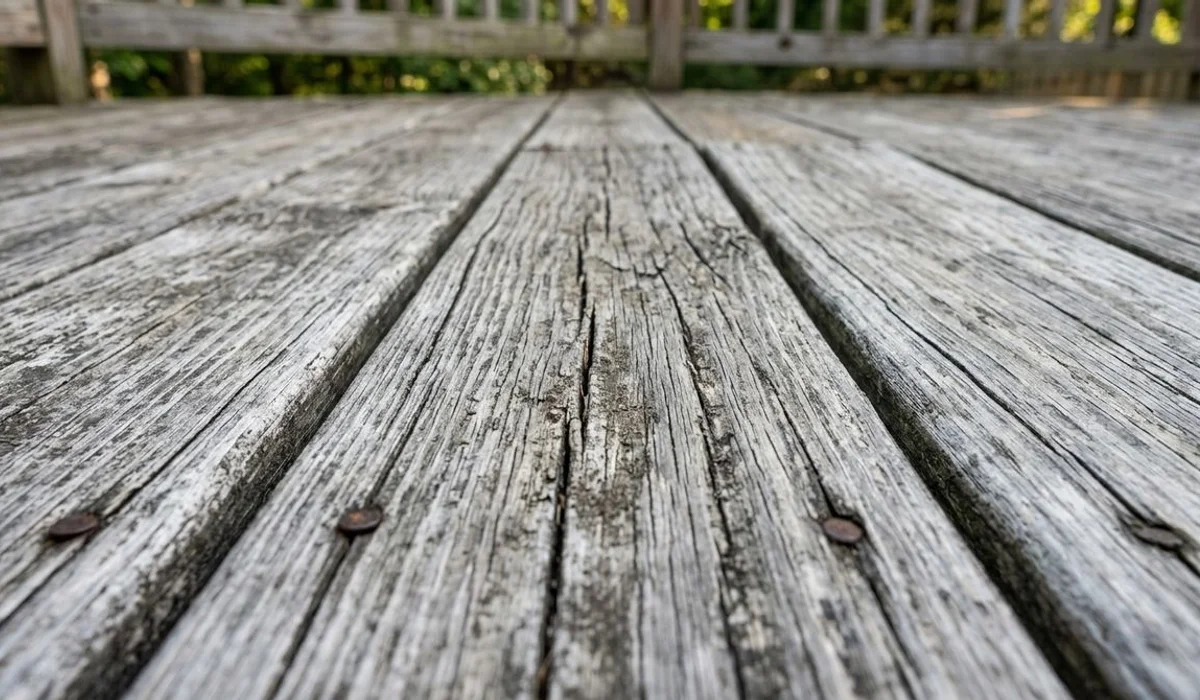
When evaluating when to restain deck nj, look for water soaking into the boards instead of beading up on the surface. You will also notice graying wood, fading colors, and visible wear paths in high-traffic spots.
We always rely on a General Tools MMD4E moisture meter for a truly accurate reading, aiming for a moisture content of 15 percent or lower. Relying on the old water bead test is helpful, but a meter guarantees the wood is dry enough to absorb the new finish. A reading above 20 percent means the coating will definitely fail.
Our experience shows that New Jersey receives roughly 45 to 50 inches of precipitation annually. This constant moisture exposure accelerates the splintering and rotting process if the wood is unprotected. Here are the clear indicators that your protective barrier is no longer working:
- Water absorbs instead of beading on the deck boards
- Gray, weathered patina developing on horizontal surfaces
- Fading color especially on south-facing sections
- Wear paths visible in high-traffic areas
- Fuzzing or splintering on board surfaces
- Mildew or green tint in shaded sections
Typical Intervals in Northern NJ
How often to stain deck surfaces depends heavily on the product, with oil-based penetrating stains lasting two to three years and solid water-based options lasting three to five years. Clear sealers typically only provide one to two years of adequate protection.
We recommend high-quality products like Cabot Australian Timber Oil for deep penetration and Benjamin Moore Arborcoat for a durable solid finish. High-traffic areas naturally require more frequent attention than shaded, protected corners. Oil formulas create a beautiful matte finish but need recoating sooner than thick water-based options.
Our crews always wait three to six months for new standard pressure-treated lumber to dry out before applying any product. As another option, you can use KDAT (Kiln-Dried After Treatment) lumber to stain almost immediately after installation. Here is a breakdown of what to expect from different applications:
- Semi-transparent oil stain: 2 to 3 years (high-UV) to 4 years (shaded)
- Semi-transparent water-based stain: 2 to 3 years
- Solid color stain: 3 to 5 years
- Clear sealer only: 1 to 2 years
- New pressure-treated lumber: 6 to 12 months after install (wait for it to dry)
- Composite decking: never needs stain (cleaning only)
What Shortens Stain Life
Direct sun exposure, heavy rainfall, and poor drainage are the primary factors that drastically reduce the lifespan of your deck finish. Applying the wrong product or building up too many coats without sanding will also cause premature failure.
We constantly see decks peel within months because the finish was applied when the wood moisture level was above 15 percent. Wood fibers simply cannot absorb protective oils when they are already saturated with water. A wet core acts as a barrier that forces the new coating to sit loosely on the surface.
Our local climate introduces extreme temperature fluctuations that cause the wood to expand and contract rapidly. This movement breaks the protective seal, especially on horizontal boards that take the brunt of the weather. These environmental stressors require vigilance to prevent severe damage:
- Direct sun exposure (south/west)
- Heavy rainfall + poor drainage
- Overhanging trees (debris, mildew)
- Previous buildup (too many coats without sanding)
- Wrong stain for wood (pressure-treated needs oil penetration)
Stain Refresh vs Full Strip
A stain refresh involves washing, lightly sanding, and re-applying the same product, while a full strip requires chemical strippers to remove failing finishes entirely. You must perform a full strip if you want to change colors or switch from an oil-based to a water-based formula.
We typically recommend a refresh for semi-transparent finishes that are simply fading but still structurally sound. Applying a maintenance coat saves time and money if the existing bond is tight. A simple wash and recoat can extend the life of your deck by another two to three years.
Our stripping process utilizes a low-pressure wash paired with a Restore-A-Deck wood brightener to restore the natural pH balance. Skipping the brightener leaves the wood too acidic, which prevents the new finish from curing properly. The table below outlines the differences between the two methods:
| Method | Process | Best Used For |
|---|---|---|
| Refresh | Wash, light sand of rough areas, re-apply same stain type. | Works for semi-transparent on sound decks. |
| Full strip | Chemical stripper, pressure wash, brightener, sand, re-stain. | Required when stain is failing or color change is desired. |
Timing the Work
The best deck restain timing nj weather provides is a window with 48 hours of dry conditions both before and after application. Overnight temperatures must remain above 50 degrees Fahrenheit with humidity levels under 80 percent for optimal curing.
We strongly advise against applying any product during direct afternoon sun, as the heat causes the finish to dry too quickly and create lap marks. Morning or late afternoon applications yield a much smoother, more even result. High temperatures basically bake the coating onto the surface before it can penetrate.
Our teams use digital moisture meters to verify the boards are completely dry after a rainstorm. Rushing the process traps water beneath the surface, guaranteeing that the fresh finish will flake off by the following spring. Plan your project around this ideal weather window:
Ideal weather window:
- 48 hours after any rain
- 48 hours dry forecast after
- Overnight temps 50°F+
- Humidity under 80%
- No direct afternoon sun on stain day (too hot, dries too fast)
Completing proper deck maintenance nj ensures your backyard remains a beautiful, safe retreat for years to come. See our exterior painting service which covers deck staining to learn how professional timing makes all the difference.