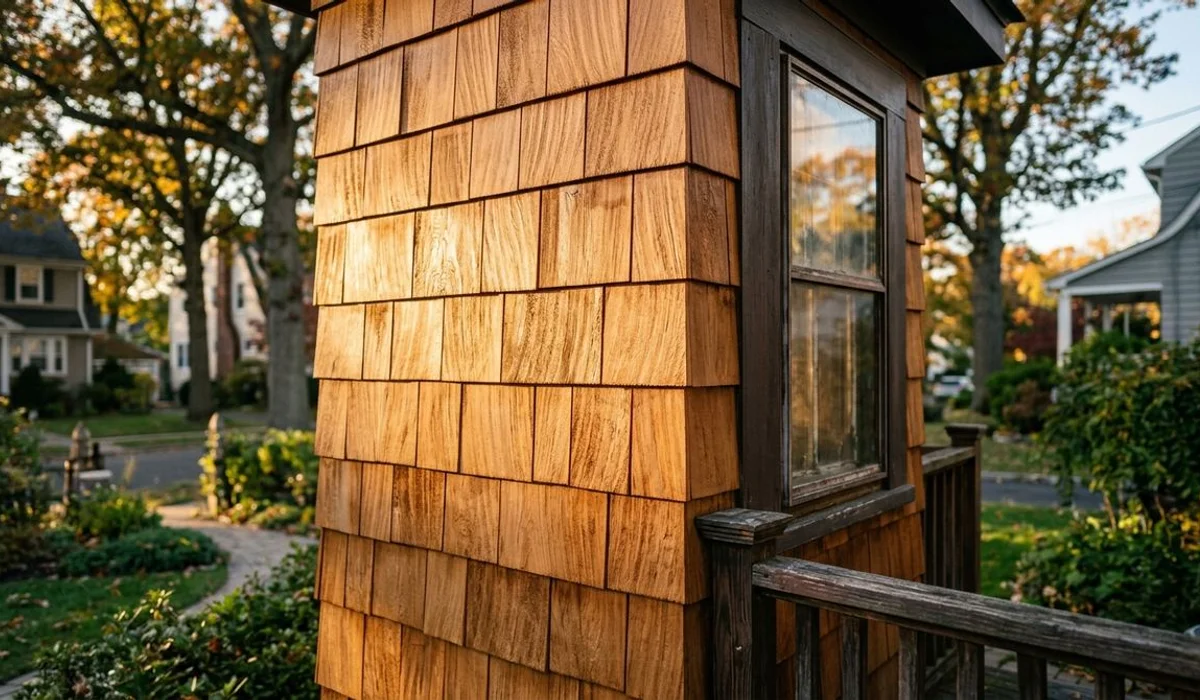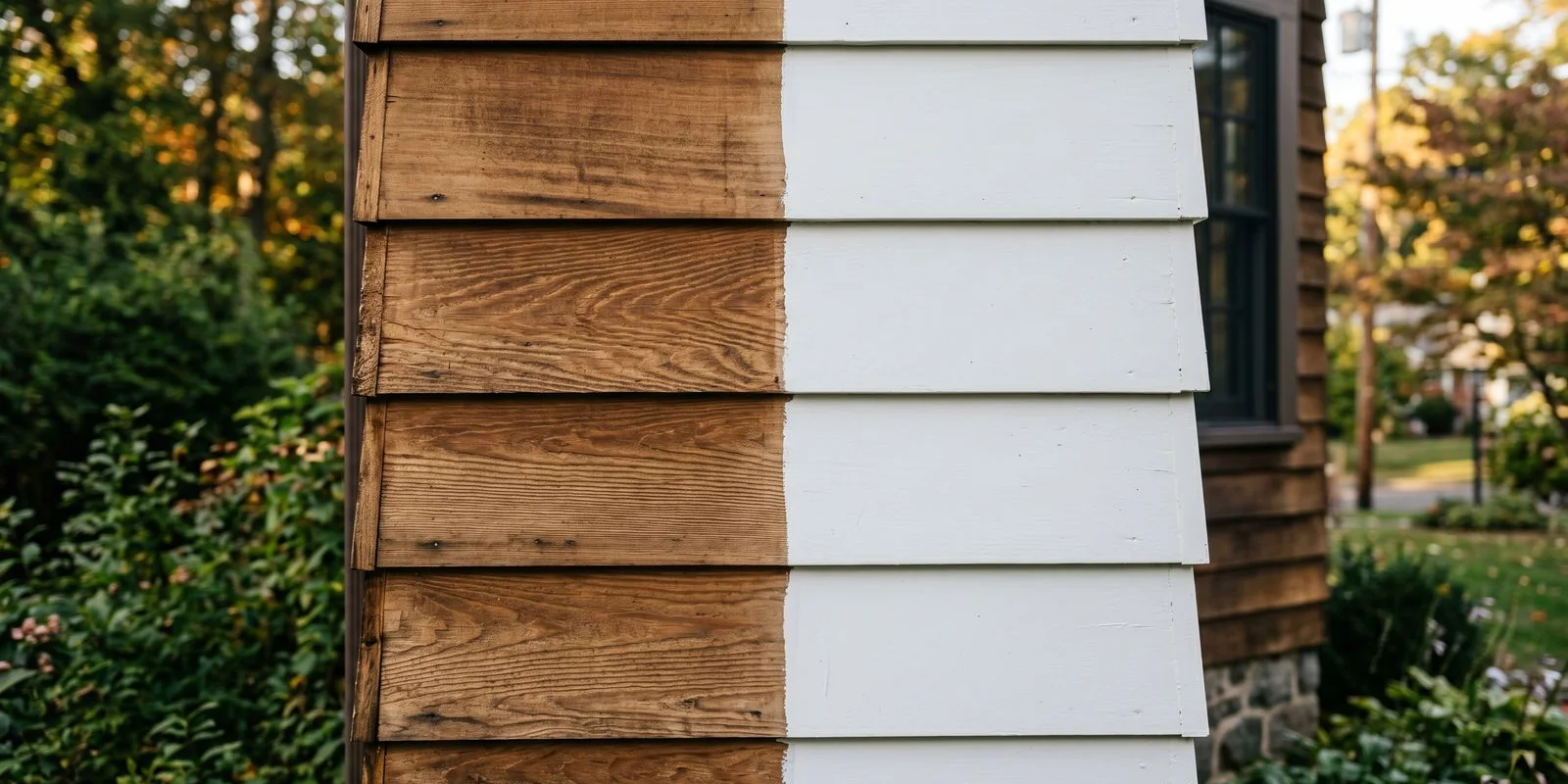
Comparison of solid stain, semi-transparent stain, and paint for Northern NJ exterior wood surfaces.
We hear questions about exterior paint vs stain almost every day. Making the right choice determines how your home looks and how much maintenance you will face down the road. Both products protect your siding, but they function in completely different ways.
Our goal is to help you pick the best finish for your specific project. Let us look at the baseline data, what it actually means for your siding, and explore a few practical ways to decide.
Quick Comparison
The biggest difference in the stain vs paint exterior debate comes down to film thickness and wood penetration. Paint creates a protective film sitting firmly on top of the surface, while stain soaks directly into the wood fibers.
This fundamental difference impacts both your upfront costs and long-term maintenance. Average installation costs for premium paint range from $3 to $6 per square foot in the US, whereas stains generally run a more affordable $2 to $4 per square foot.
Here is a side-by-side look at the baseline facts.
| Feature | Paint | Solid Stain | Semi-Transparent Stain |
|---|---|---|---|
| Appearance | Opaque, smooth | Opaque, shows grain | Wood grain visible |
| Lifespan | 7-15 years | 5-7 years | 3-5 years |
| Maintenance | Full repaint | Full recoat | Refresh only |
| Best for | Any sided home | Homes wanting updated look | Cedar, rustic aesthetic |
| Color options | Unlimited | Wide | Wood tones only |
| Cost (installed) | $3 to $6 per sq. ft. | $2 to $4 per sq. ft. | Lowest upfront cost |
When Paint Wins
Paint is the undisputed winner when you need maximum protection and complete color control. A premium 100 percent acrylic latex formula, like Benjamin Moore Aura or Sherwin-Williams Emerald, forms a highly durable shield against the elements. This thick coating completely masks wood grain, previous patches, and mismatched materials.
These high-quality acrylics stretch and flex with temperature changes, minimizing the risk of cracking on stable surfaces.
- You want a specific color match (trim white, historic color)
- Siding has repairs, patches, or mixed substrates you want hidden
- Long-interval, low-maintenance approach
- Fiber cement, vinyl, aluminum, or stucco (stain is wood-only)
When Solid Stain Wins
Solid stain provides an opaque color while still allowing the natural texture of the wood to show through. We recommend this option for rough-sawn cedar or textured T1-11 siding because it penetrates the wood rather than sitting heavily on top. This breathability means a solid stain is much less likely to peel during rapid temperature swings.
Comparing a solid stain vs paint exterior finish usually comes down to the current condition of your existing wood.
- Cedar or wood-shingle homes going modern
- You want the texture of stain (slightly less plasticky than paint)
- Shorter recoat interval is acceptable
- Wood is in great shape and doesn’t need hiding
When Semi-Transparent Stain Wins
Semi-transparent stain allows both the texture and the natural color variations of the wood to remain clearly visible. These penetrating oils offer a beautiful, rustic look but contain far less pigment to block harsh UV rays. You can expect to refresh a semi transparent stain nj application every three to five years to maintain maximum water repellency.
The lighter pigment load means the wood itself takes center stage.
- Cedar clapboard, shingle, or log homes
- You love the wood grain and want to keep it visible
- Rustic or mountain-house aesthetic
- Fine with 3-5 year refresh cycle
Our Recommendations for NJ Homes
Our team adapts every finish recommendation to handle the specific humidity and freeze-thaw cycles found across Northern New Jersey. High moisture levels mean the wrong coating will trap water and fail prematurely. Finding the perfect balance between aesthetics and durability is critical for local homeowners.
We look closely at the substrate material before making a final call. Here are our baseline recommendations for common local siding types.
- Pre-war clapboard (Bloomfield, Montclair): Paint, as color control matters
- Cedar-shingle accents: Semi-transparent stain to let grain show
- Full-cedar new construction: Solid stain for lower-maintenance
- Vinyl/fiber cement: Paint only
If you are planning your maintenance schedule, check out our guide on how often to repaint exterior for complete lifespan details.