EPA RRP lead-safe painting practices for Bloomfield, Montclair, and Nutley pre-1978 homes. What containment looks like and why it matters for your family.
Our team sees Northern New Jersey homeowners struggle with updating classic properties safely every single day. Many of these older houses hide invisible hazards underneath layers of peeling paint.
Lead dust settles quickly into floors and carpets where young children play.
We follow strict safety protocols to handle this exact problem. The Environmental Protection Agency recently updated its lead dust standards in early 2025.
Those new rules cut the acceptable floor dust limits in half, creating a much stricter environment. Our experts will walk you through the data, explain what actual compliance looks like, and share the right questions to ask your contractor.
Why Lead-Safe Prep Matters in Northern NJ
Pre 1978 home painting requires specialized preparation because disturbing old surfaces releases toxic dust into your living space. Proper lead safe painting nj procedures contain this dust before it ever reaches your family. We know the local housing stock inside and out.
Essex County has some of the highest concentrations of older homes in the entire state. Recent state data shows that over 90 percent of properties in Bloomfield and Glen Ridge were built before the 1978 lead paint ban. Our painters treat these historic local homes with the extreme caution they deserve.
State health data confirms this widespread risk across the region.
Even a tiny amount of lead dust can cause permanent harm.
We constantly remind clients that a particle the size of three sugar grains is enough to be dangerous. A simple dry sanding job on a single door frame easily generates that much dust.
Professional containment becomes absolutely critical for your peace of mind. Our safety-first approach eliminates these risks entirely.
What RRP Compliance Looks Like On Site
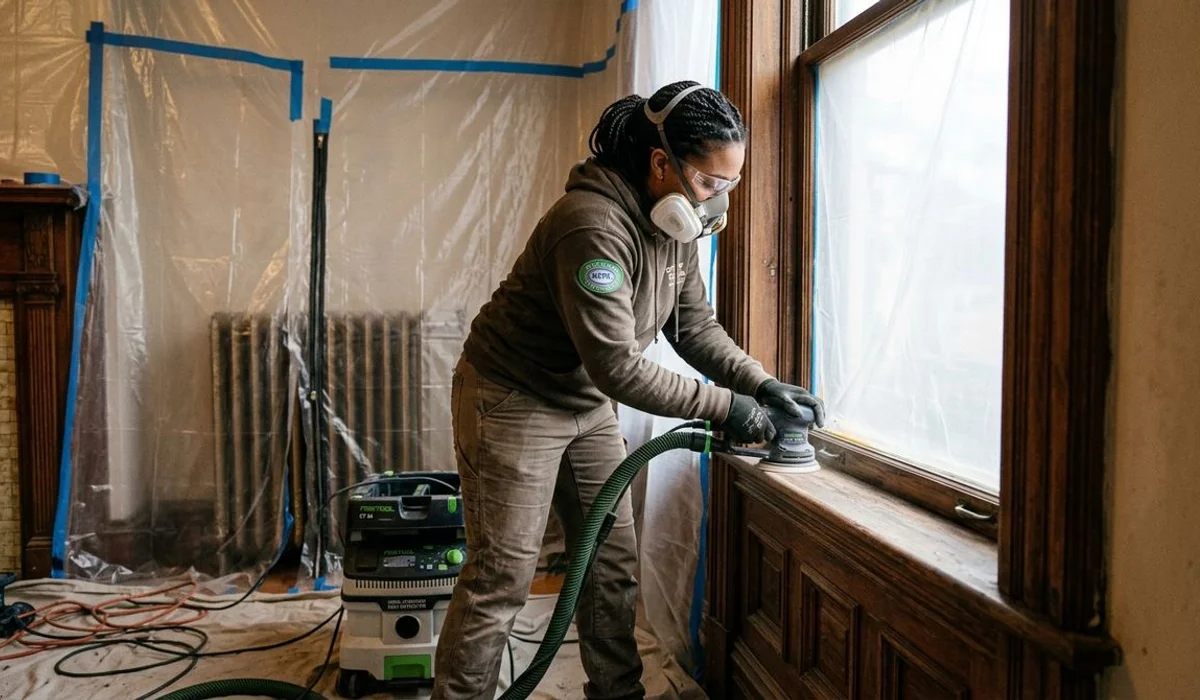
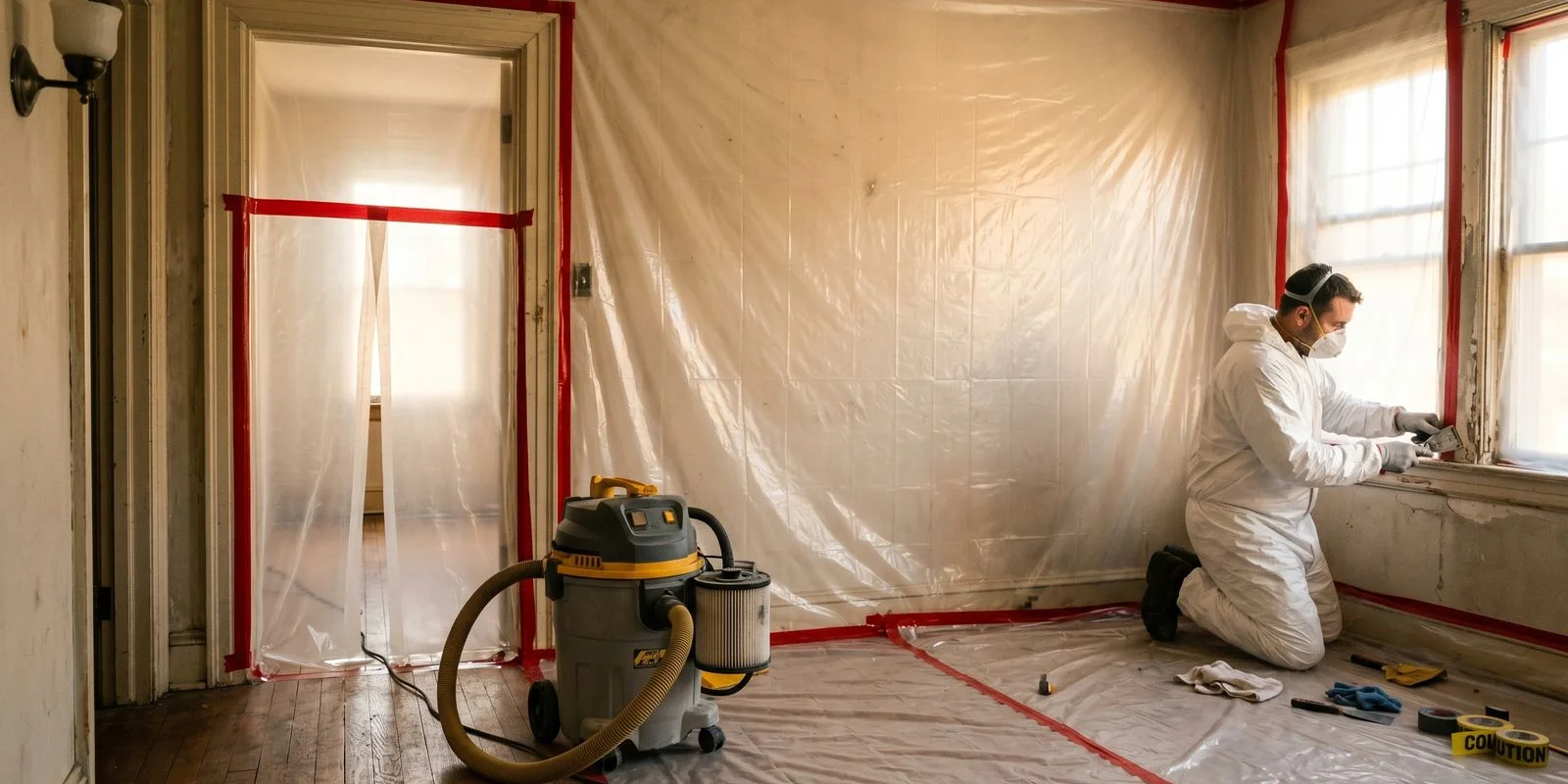
True compliance means sealing off the workspace and using specialized filtration equipment to stop contamination. An authorized epa rrp painter nj uses specific tools to keep your home pristine. Our crews follow a rigid checklist to secure the area before opening a single paint can.
The setup process involves several non-negotiable steps. Every detail matters when containing hazardous dust.
- 6-Mil Plastic Sheeting: Our team uses heavy-duty virgin polyethylene to seal floors, furniture, and HVAC returns.
- HEPA-Filtered Vacuums: Standard shop vacuums just exhaust micro-particles back into the air.
- Wet Sanding Techniques: Wetting the surface prevents hazardous dust from becoming airborne during prep work.
- Full Protective Gear: We wear disposable suits and respirators to avoid tracking debris through your hallways.
- Safe Debris Disposal: All waste gets bagged and sealed tightly inside the contained area.
- Final Verification: A thorough HEPA vacuum pass and wet wipe happen before the plastic comes down.
What to Ask Your Painter
We recommend vetting any contractor thoroughly before they touch a painted surface in your older home. You need to ask direct questions about their certifications and specific safety methods. The penalties for ignoring these rules are severe.
Our firm maintains full compliance because the EPA actively enforces these standards. In 2025 and 2026, federal fines for RRP violations jumped to over $40,000 per infraction. Property managers and uncertified painters risk massive liability if they cut corners.
We want you to feel completely confident in whoever you hire. Ask these specific questions during your initial consultation.
| Question to Ask | Why It Matters |
|---|---|
| EPA Lead-Safe Certified Firm status | Validates legal authorization and provides a certificate number |
| Crew member training verification | Ensures workers know exact dust protocols |
| 6-mil plastic sheeting usage | Prevents contamination better than standard tarps |
| Paint testing procedures | Confirms lead presence before any sanding begins |
A reliable professional will gladly provide their certification number for you to verify on the official EPA website. Our project managers always clearly explain our containment strategy upfront. The exact process will depend on your specific floor plan.
When Full Abatement Is Appropriate
Standard RRP protocols cover basic renovation and painting tasks that disturb less than six square feet of interior surface. We will always tell you if a project requires a specialized abatement contractor. Full lead paint encapsulation or permanent removal requires a completely different approach.
Abatement permanently eliminates the hazard rather than just managing it during a cosmetic update.
- Purpose: Permanent hazard elimination versus temporary containment
- Scope: Major room guts or total paint stripping projects
- Certification: Specific Department of Community Affairs credentials required
Our team focuses on safe preparation for painting, leaving total removal to other specialists. If you plan to gut a room, you need one of those certified experts. New Jersey strictly enforces these distinctions.
We are happy to point you in the right direction if your project goes beyond standard painting. See older-home concerns for the plaster-wall side of pre 1978 home painting.
Updating an older home should be an exciting process, not a stressful health risk.
Our experts are ready to discuss your specific needs and timeline. Proper containment keeps your family safe while breathing new life into your rooms. Contact us today to schedule a consultation and get a detailed lead-safe estimate.