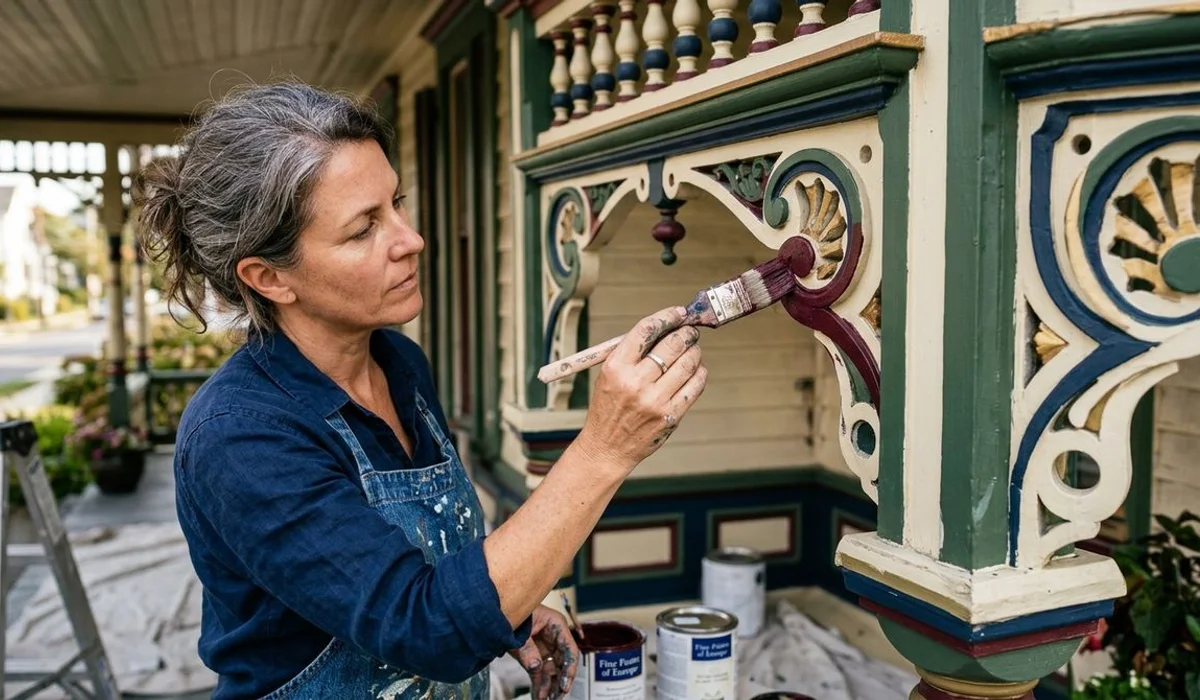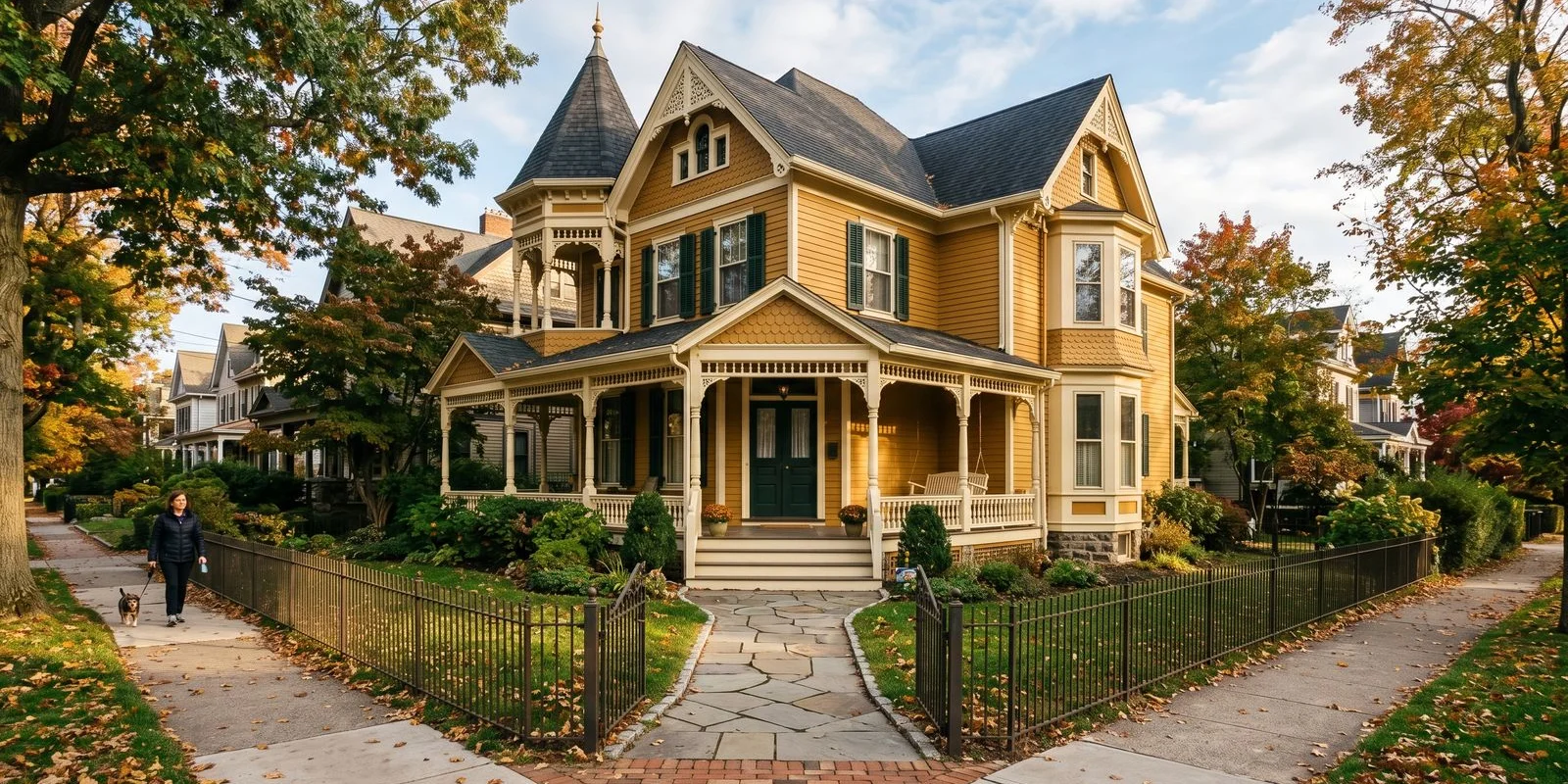
Era-appropriate color, intricate trim work, and historic-district coordination for Montclair, Bloomfield, and Nutley colonials.
We often see homeowners treat century-old exteriors like modern builds, which is a fast track to peeling paint and lost charm.
Mastering historic colonial painting Essex County projects means understanding that an 1880s Victorian simply does not breathe or wear the same way as a 1920s Colonial Revival.
Montclair, Bloomfield, Glen Ridge, and Upper Nutley hold incredible stocks of these pre-war homes. They require era-appropriate paint decisions to preserve their value. Finding a qualified Victorian painter Essex County homeowners recommend is critical to protecting these specific architectural details.
These are not isolated color choices. They operate as complete palette systems where the body, trim, sash, shutter, and door must work together perfectly.
Historic Colonial Painting Essex County: Why The Work Is Different
Our team approaches historic homes with a distinct mindset. Essex County neighborhoods like the Montclair Town Center Historic District demand specific architectural respect.
You risk losing the home’s historic integrity if you apply a stark modern white over delicate turn-of-the-century millwork.
Period-Appropriate Palettes
Choosing the right shades can feel overwhelming without a clear guide. The Benjamin Moore Historical Collection offers 191 historically accurate options that take the guesswork out of the process.
Our clients frequently request these specific, era-tested palettes to maintain neighborhood harmony. Proper color selection highlights architectural details while hiding structural imperfections.
Victorian Era (1880s to 1900s)
You typically need three to five colors for a Victorian exterior. Deep body colors anchor the complex architecture, while lighter trim and bold accent colors highlight window sashes and decorative fish-scale shingles.
- Body Colors: Rich tones like Benjamin Moore’s Hale Navy (HC-154) or New London Burgundy (HC-61).
- Trim & Accents: Softer contrasts that draw the eye to gingerbread trim.
- Doors: Deep, grounding shades to complete the look.
Colonial Revival (1900s to 1930s)
We find that two to three colors work best for these stately properties. Muted natural tones provide a classic foundation.
- Body Colors: Soft grays and sage greens, such as Edgecomb Gray (HC-173) or Saybrook Sage (HC-114).
- Trim: Crisp whites or soft creams.
- Accents: Black or dark green for doors and shutters.
Classic Colonial (Georgian, Federal)
A reserved two-color approach defines this elegant style. Period-correct paints lean toward matte or low-lustre finishes.
- Body: Reserved tones like Woodlawn Blue (HC-147).
- Trim: Clean, bright white to frame the symmetrical windows.
Historic-District Coordination
Understanding local regulations is a critical first step for any exterior update.
If your property falls within a Montclair Historic Preservation Commission (HPC) district, strict guidelines apply.
Our team handles the necessary paperwork and color swatch submissions regularly. The HPC follows principles based on the National Historic Preservation Act of 1966, emphasizing the repair and retention of original features.
Failing to secure approval before painting can result in costly fines or forced repaints.
Fast-Tracking Your Approval Process
- Administrative Approval: Repainting your home in the exact same colors usually qualifies for rapid administrative sign-off.
- Full Commission Review: Requesting a new color palette requires a formal review.
- Lead Times: Budget 30 to 60 days for a full review process.
- Documentation: Supplying physical color boards and detailed swatch lists speeds up the conversation.
What Makes the Work Slower
Historic restorations require a completely different timeline than standard exterior repaints.
We plan for extended prep phases. Rushing the foundational work ruins the final finish.
Several specific factors extend the project schedule on older New Jersey properties.
- EPA Lead Paint Protocols: Homes built before 1978 require strict Renovation, Repair and Painting (RRP) safety measures, which can add 20% to 30% more prep time.
- Complex Cut Lines: A five-color Victorian demands five times the hand-cutting of a single-color Colonial.
- Intricate Trim Details: Painters must carefully hand-brush brackets, finials, and gingerbread detailing.
- Sash-and-Sash Painting: Applying different colors to the window sash, frame, and trim requires slow, precise brushwork.
- Pigment Density: Certain historic paint formulations require multiple coats to achieve full opacity.
Our Typical Historic Process
Proper sequencing is the secret to a flawless and durable exterior finish.
We follow a strict eight-step methodology to protect your property and ensure long-lasting results.
A methodical approach prevents common failures like peeling or trapped moisture.
- Walkthrough and Photo Inventory: Documenting every piece of trim, sash, and shutter ensures nothing is missed.
- Color Consultation: Proposing an era-appropriate palette matched to your home’s architecture.
- HPC Paperwork Management: Managing all district compliance forms and swatch submissions keeps the project on schedule.
- Specialized Prep Sequence: Washing with low pressure (under 1,500 PSI) protects delicate historic wood, followed by scraping, sanding, elastomeric caulking, and rot repair.
- Body Base Coat: Applying the main siding color across all elevations first.
- Trim Application: Coating outer trim, fascia, soffits, and corner boards.
- Sash and Window Details: Executing the fine, hand-brushed color work.
- Shutters and Doors: Removing hardware to paint these elements perfectly before rehanging them.
Pricing Reality
Budgeting accurately for a historic restoration requires looking past standard square-footage averages.
For 2026, standard exterior painting in New Jersey typically costs between $2.00 and $5.50 per square foot.
We find that historic homes almost always land at the higher end of that spectrum due to intense prep work. Siding repairs, complex multi-color palettes, and multi-story scaffolding significantly impact the final investment.
2026 Historic Painting Cost Estimates
| Property Profile | Estimated Cost Range | Primary Cost Factors |
|---|---|---|
| Standard Historic Colonial | $5,000 to $9,000 | Light prep, two-color palette, straightforward trim. |
| Multi-Color Victorian | $9,000 to $14,000+ | Three to five colors, extensive hand-cutting, gingerbread trim. |
| Large Estate Section Home | $18,000+ | Maximum square footage, heavy wood rot repair, lead safety protocols. |
These figures represent realistic expectations for true historic craftsmanship.
Securing a reliable historic home painter NJ counts on ensures your investment lasts for decades.
See our exterior painting service and our Montclair service area page for more specific details.