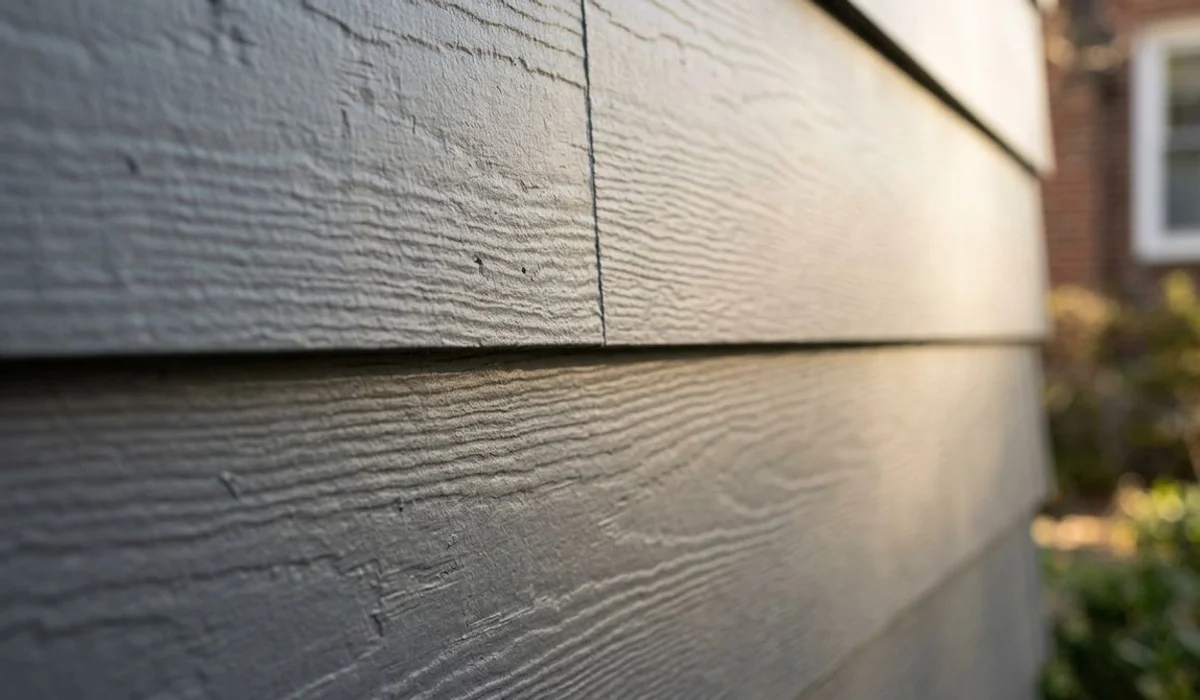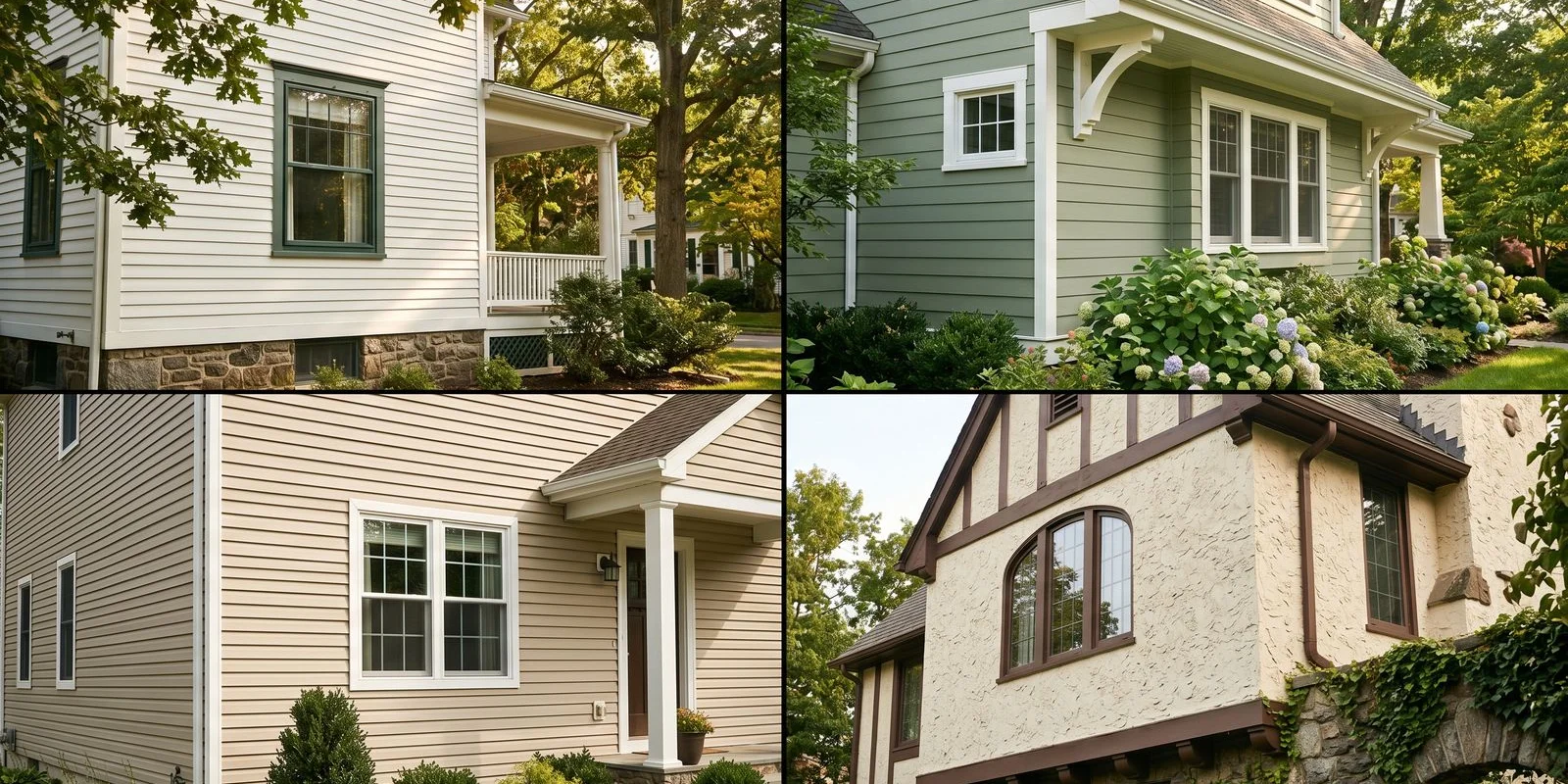
Paint systems and prep by substrate — wood clapboard, cedar, fiber cement, vinyl, aluminum, and stucco.
We know New Jersey weather is tough on home exteriors. You want your house to look great, but the humid summers and freezing winters take a heavy toll.
Our team frequently sees exterior paint jobs fail prematurely simply because of incorrect product choices. Proper preparation and specific product knowledge are the difference between a finish that lasts three years and one that lasts fifteen.
This guide will provide clear steps to protect your investment.
We are going to walk you through the exact methods, recommended products, and local climate strategies for every major siding material.
Wood Clapboard / Cedar
To properly paint wood or cedar siding, you must wash, scrape, sand, caulk, and prime bare areas before applying two coats of 100% acrylic exterior paint. Wood is highly porous and vulnerable to moisture.
Our approach always starts with managing local threats like carpenter bees and high humidity. Bare spots require a high-quality alkyd or bonding primer.
Benjamin Moore Fresh Start primer is a fantastic option for sealing raw cedar. You need a primer that blocks tannin bleed.
We usually follow this up with a premium topcoat like Benjamin Moore Aura Exterior. A gallon of Aura Exterior runs around $107 in 2026, but the color retention is exceptional. Homeowners save money in the long run by extending the paint lifecycle.
Wood Siding Preparation Checklist
- Wash: Remove dirt and mildew with a gentle cleaner.
- Scrape and Sand: Eliminate loose flakes to create a smooth surface.
- Caulk: Seal gaps to prevent water intrusion.
- Prime: Apply an alkyd or bonding primer to bare wood.
- Topcoat: Apply 2 coats of 100% acrylic exterior paint.
We expect a well-prepped wood siding job to last 7 to 10 years. Skipping the primer phase cuts that lifespan in half.
Our painters spend more time prepping than actually painting. This careful attention to detail stops peeling before it starts.
Fiber Cement (HardiePlank)
To paint fiber cement, you need to wash the surface, spot-prime any cut ends, and apply two coats of 100% acrylic paint. This material is incredibly durable.
Our team highly recommends respecting the manufacturer recoat window for the best adhesion. Factory-finished boards perform differently than primed ones.
James Hardie offers a 30-year product warranty and a 15-year ColorPlus finish warranty. You must follow their specific maintenance guidelines to keep that coverage active.
We always remind clients that primed Hardie boards must be painted within 180 days of installation. Waiting longer exposes the raw material to the elements.
Fiber Cement Paint Lifespan Comparison
| Finish Type | Expected Lifespan | Maintenance Notes |
|---|---|---|
| Field-Painted (Primed) | 8 to 12 years | Requires painting within 180 days of installation. |
| Factory-Finished (ColorPlus) | 15+ years | Wash annually with a soft brush and water. |
We find that Sherwin-Williams Emerald Exterior works beautifully over fiber cement. The thick acrylic formula resists the fading common in sunny, exposed locations.
Our crews spot-prime any bare spots or cut ends with a standard acrylic primer first. You will get an incredibly smooth, lasting finish with this combination.
Vinyl Siding
Painting vinyl requires washing the siding with a vinyl-safe cleaner, applying a bonding primer, and using two coats of vinyl-safe acrylic paint. Dark paint colors absorb heat and cause vinyl to warp permanently.
Our standard practice is to strictly use paints with a Light Reflectance Value (LRV) of 55 or higher. This prevents the panels from absorbing excessive solar heat.
Sherwin-Williams offers a dedicated VinylSafe color palette featuring over 100 options. You can actually use darker shades from this specific line without risking damage to the substrate.
We regularly use Sherwin-Williams ProBlock or XIM UMA as a bonding primer to ensure the topcoat sticks. Standard primers do not adhere well to smooth plastics.
Vinyl Siding Painting Rules
- Prep: Wash with TSP or a vinyl-safe cleaner and rinse thoroughly.
- Primer: Use a vinyl bonding primer to create a gripping surface.
- Topcoat: Apply 2 coats of vinyl-safe acrylic paint.
- Color limit: Stick to an LRV of 55 or higher to prevent heat warping.
- Life: Expect 5 to 7 years of durability.
Our crews see warped vinyl siding far too often. The replacement costs easily exceed thousands of dollars.
We strongly suggest verifying the LRV number on the paint can before opening it. A quick check prevents a massive headache down the road.
Aluminum Siding
To restore aluminum siding, you must pressure wash the chalky oxidation away, apply an etching primer, and finish with two coats of 100% acrylic exterior paint. Aluminum fades and chalks heavily over time.
Our preparation process focuses heavily on removing that powdery residue so the new paint can bond. Unwashed aluminum will cause new paint to peel within months.
You need a specialized product to grab onto bare metal. We recommend using a galvanized metal self-etching primer like Custom Shop Premium on heavily oxidized areas.
This chemical formulation etches into the aluminum to create a permanent grip. Our go-to topcoat is a high-quality acrylic because it expands and contracts with the metal during temperature shifts.
Essential Steps for Aluminum Restoration
- Prep: Pressure wash the exterior to remove chalking.
- Etch: Oxide-prep the surface if it is heavily oxidized.
- Primer: Apply an oxide-converting or self-etching primer.
- Topcoat: Finish with 2 coats of 100% acrylic exterior paint.
We expect a proper aluminum paint job to last 8 to 12 years. The key is applying the acrylic paint evenly to prevent roller marks on the smooth metal.
You get a factory-like finish when you follow these exact steps.
Stucco
Painting stucco involves washing the surface, repairing hairline cracks with elastomeric patching, and applying a masonry acrylic primer before the topcoat. The freeze and thaw cycles in the Northeast are brutal on rigid exterior surfaces.
Our team uses flexible coatings to prevent seasonal cracking. Traditional exterior paints are often too brittle for this application.
Sherwin-Williams Loxon XP is an outstanding elastomeric paint choice. The thick coating acts like a rubber membrane over the stucco.
We use this to bridge small gaps and block wind-driven rain. Moisture intrusion is the number one cause of stucco failure.
Acrylic vs. Elastomeric Stucco Paint
| Paint Type | Best For | Expected Life |
|---|---|---|
| Acrylic Exterior (Breathable) | Newer stucco with minimal cracking. | 7 to 10 years |
| Elastomeric (Crack-Bridging) | Older, cracked stucco needing waterproof protection. | 10 to 15 years |
Our preparation includes a thorough wash and a masonry acrylic primer. You cannot paint over a dusty, powdery stucco wall and expect it to hold.
We let the primer dry completely before applying the heavy elastomeric topcoat.
Common Mistakes
Ignoring weather conditions and failing to prepare the surface are the main reasons exterior paint jobs fail. A recent Study Finds survey revealed that four in ten people experience DIY failures and call a professional after just five hours of frustration.
Our industry experience completely aligns with these statistics. Taking shortcuts on prep work ruins expensive materials.
You have to respect the climate limitations in our region. We never paint exteriors when the temperature drops below 50 degrees Fahrenheit. Cold weather prevents water-based paints from curing properly and leads to poor adhesion.
Avoid These Costly Errors
- Skipping vinyl-safe paint on vinyl siding causes cracks and warps within 2 years.
- Using wall paint on exterior trim ruins the finish since trim paint is formulated differently.
- Painting over chalking without a proper wash and primer guarantees peeling.
- Single-coat jobs always fail prematurely, so stick to two coats minimum.
Our goal is to help you achieve a beautiful, lasting finish. You can always reach out if a project becomes too complex.
See our exterior painting service for siding-specific estimates.