The six most common reasons exterior paint fails in NJ — moisture, prep, primer, product mismatch, UV, and freeze-thaw.
Our team routinely inspects homes across Northern New Jersey where the exterior finish is flaking off after barely three years. The harsh reality is that local weather conditions punish anything less than perfect surface preparation.
Researching why exterior paint peels nj is the first step toward breaking the frustrating cycle of constant touch-ups.
We see the same specific mistakes happening across hundreds of properties every season. Moisture trapped in the siding often acts as the primary culprit behind the damage. Reviewing the data reveals what is actually happening and points to practical ways to respond.
Six Common Failure Modes
We classify exterior paint failure into six common modes, from hidden moisture to extreme freeze-thaw cycles. Homeowners often mistake one type of damage for another, which leads to using the wrong repair strategy. The following list breaks down the exact peeling paint causes so you know why your home’s exterior might be struggling to hold its coat.
- Moisture from behind: Trapped attic moisture, failed roof flashings, or missing caulk allow water to saturate the wood. Research shows that if the wood moisture content climbs above 20 percent, coating failure is virtually guaranteed as the water forces its way out.
- Skipped prep: Painting over chalky, dirty, or mildewed siding causes the new finish to peel in large layers.
- Wrong primer (or no primer): Leaving bare wood without a primer, or applying oil paint over latex without a high-quality bonding primer, destroys adhesion.
- Product-substrate mismatch: Slapping a standard acrylic on vinyl, using oil on fiber cement, or applying interior wall paint on exterior trim will always end poorly.
- UV breakdown: Cheap exterior paint or solid colors with fugitive pigments will fade and chalk in just two to three years. Upgrading to a premium, UV-resistant formula like Benjamin Moore Aura or Sherwin-Williams Emerald extends color life significantly in direct sun.
- Freeze-thaw damage: Painting in the fall with cold nights below 40 degrees Fahrenheit means the product cures poorly and fails the next spring. New Jersey experienced extreme temperature swings in January 2026, with average lows dropping to 5 degrees, causing wood to violently expand and contract.
How to Diagnose Peeling
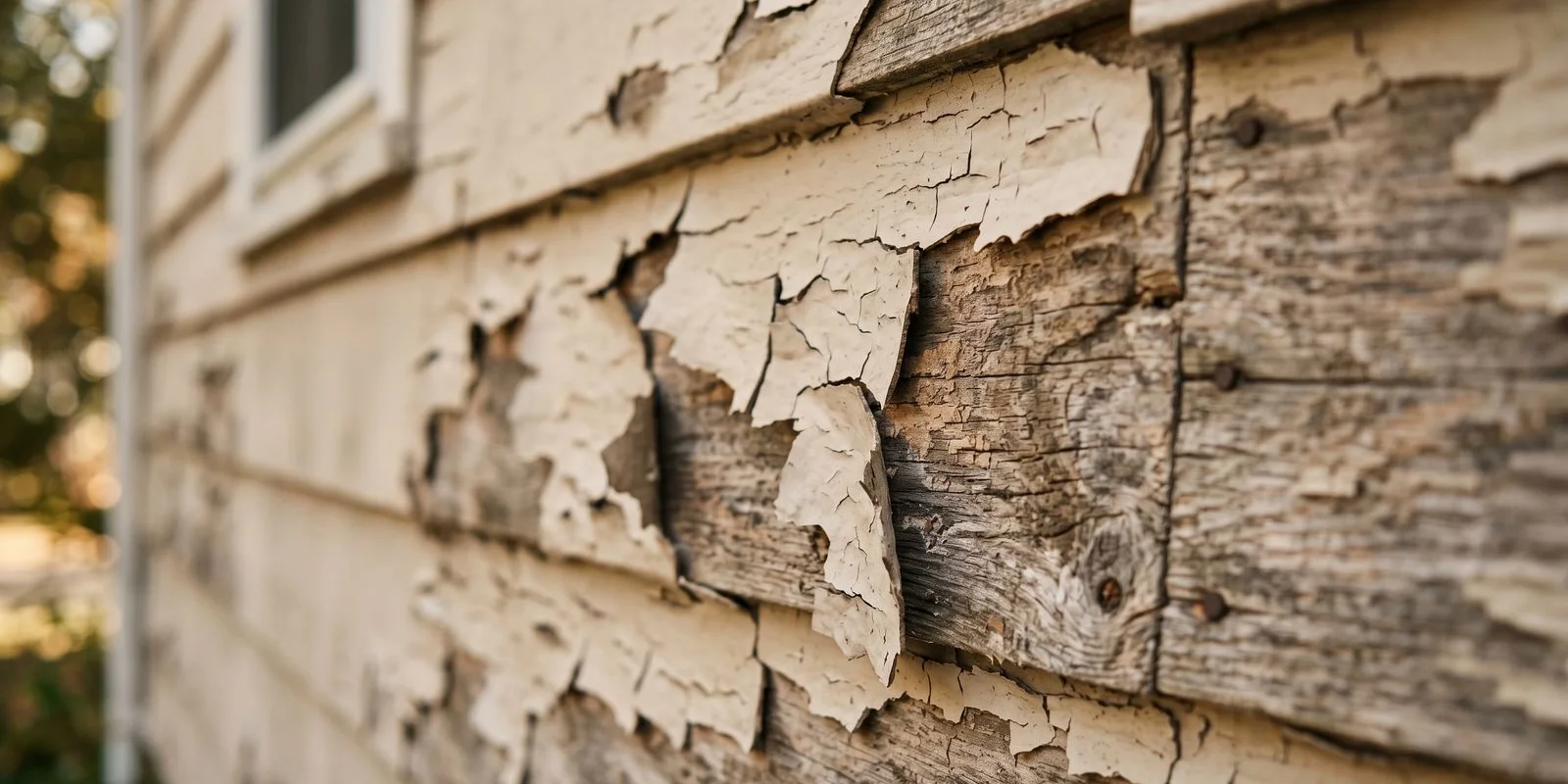
Our diagnostic process always begins with a close visual inspection of the flaking areas. You need to look closely at the shape of the peeling layer and the surface directly underneath it to properly diagnose exterior paint peeling. Using a pinless digital moisture meter helps confirm if hidden water is the root cause before you start scraping.
We recommend comparing your specific issue to this diagnostic checklist.
| Visual Symptom | Underlying Cause | Pro Action Required |
|---|---|---|
| Peels to bare wood and bubbles | Moisture from behind | Check for active leaks and ensure wood moisture is below 15 percent. |
| Peels in large flakes with dust underneath | Chalking and adhesion failure | Wash thoroughly and apply a specialty product like Zinsser Peel Stop. |
| Peels only on south/west walls | UV and product quality issues | Upgrade to high-UV acrylics like Sherwin-Williams Emerald. |
| Peels only near roof edges, corners, or windows | Flashing or caulk failure | Replace flashing and reseal joints completely. |
This table covers the most frequent issues, but combination failures can also happen. A wall with both severe sun exposure and a broken gutter will show multiple symptoms at once.
What Proper Prep Looks Like
We consider proper preparation to require intense cleaning, structural repairs, and specialized primers. Skipping these specific steps is the fastest way to ruin expensive materials and waste your weekend. Doing the job right the first time guarantees your home stays protected.
Cleaning and Scraping
Our crews always start with a thorough wash to remove chalking, dirt, and microscopic mildew. Pressure washing at a controlled 1500 to 2000 PSI ensures the substrate gets clean without gouging the soft wood.
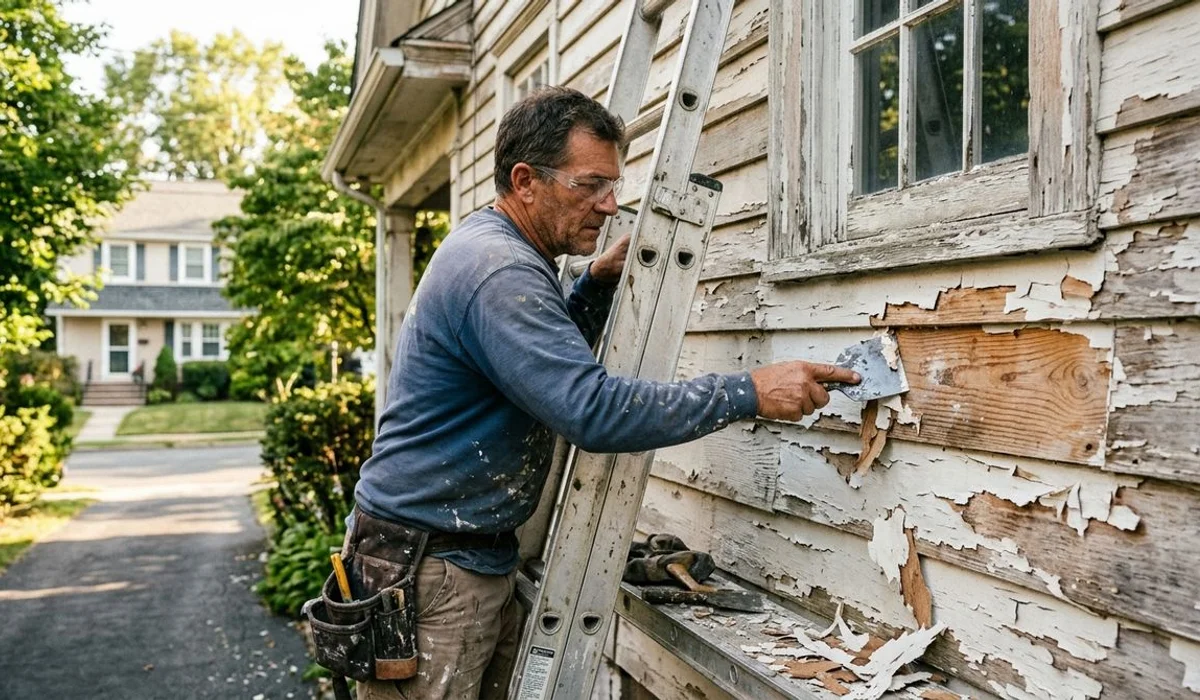
You must scrape away all loose material, feather sand the edges, and remove any sharp ridges that could cause the new finish to lift.
Repairing and Priming
We cut out all visible wood rot rather than trying to paint over spongy boards. A professional-grade epoxy filler like Abatron WoodEpox works best here because it cures completely in three hours and will not shrink like cheap putty. Caulking all seams with a high-grade siliconized acrylic seals out future water intrusion.
We then apply a primer appropriate to the substrate, such as a bonding primer on bare wood or a vinyl-safe option on vinyl siding. Finally, applying two full topcoats of quality 100 percent acrylic seals the system and provides maximum durability. High-quality finishes require this level of detail to survive the seasons.
When “Just Repaint Over It” Fails
Our clients frequently ask if they can just add another quick coat to hide the damage. Painting over an existing failed surface simply transfers the failure to the new layer, meaning the original peeling layer will eventually detach and take your expensive topcoat right off with it. You end up paying for the exact same labor and materials twice within a very short timeframe.
We follow a strict rule for these situations to protect your investment. If you see peeling on more than 20 percent of an elevation, you must completely strip and refinish that entire side. Researching why exterior paint peels nj helps you make smarter choices for your property.
Our team handles full-scale restoration through our exterior painting service. You can also read our dedicated caulking and wood rot repair guide for step-by-step instructions on fixing structural damage first. Catching these problems early saves you money and hassle in the long run.